
Architects of the powerful Iran
The strategy that was devised at the Nuh (pbuh) Naval Headquarters
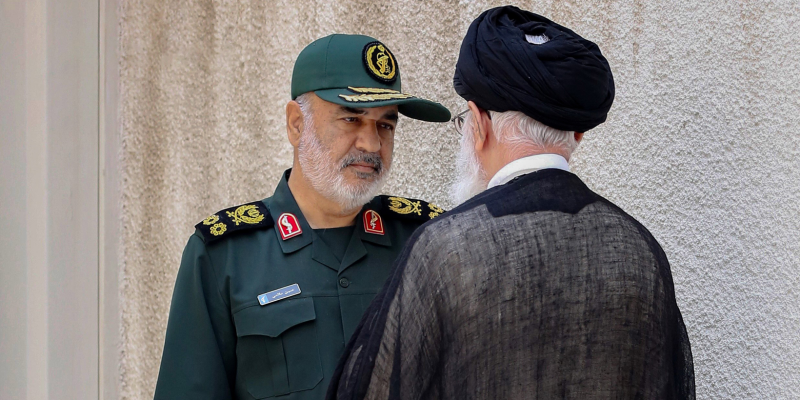
Twenty‑nine years ago, during a senior war command course in the IRGC, a 37‑year‑old brigadier general was outlining the concept of asymmetric warfare against extra‑regional enemies: “If the war expands from the air to the sea and ground, engagement with US forces becomes possible — and victory is attainable. This type of warfare neutralizes the effectiveness of the enemy’s advanced weapon systems and, to some extent, disarms them. The economic costs of war, its attritional nature, and prolonging it are other advantages — especially given that the economic burden of US involvement in distant regions is extremely high.”
From those days, Iran was already preparing its Armed Forces’ combat structure for a possible next confrontation with the US. Within this context, the Armed Forces gradually adapted themselves for this kind of warfare against an unequal power. On one occasion, commanders and senior officers gathered at the IRGC’s senior war course at the Command and Staff College for training. One of the course modules was taught by someone who had already experienced this type of warfare against Iraqi and American naval units during the 8-Year Imposed War with the Ba’athist regime, at the Nuh (pbuh) Naval Headquarters — a commander who, 22 years later, would assume the command of the entire IRGC: Major General Hossein Salami.
The Nuh (pbuh) Naval Headquarters and its commanders and officials can be regarded as the foundation and starting point of Iran’s concept of asymmetric naval defense. Kharg Island, as Iran’s main oil export terminal, along with the central and western maritime zones of the Persian Gulf, made this headquarters a crucial node for monitoring, exercising control, and confronting extra‑regional forces in the Persian Gulf. During the Tanker War and other naval operations, this headquarters became the focal point for organizing and conducting the IRGC’s naval operations against US and extra‑regional forces. The ideas that Hossein Salami and his comrades taught at the Command and Staff College in the following decade had already proven their effectiveness in practice during the 1980s.
Ideas such as asymmetric warfare, shifting from large vessels to small, agile, swift, and lethal boats, leveraging the long coastline and turning it into an invisible defensive armed belt, disruptive naval mine‑laying, imposing constraints on the enemy’s vital maritime and economic corridors, and the tactic of mass‑producing small but agile fleets — all emerged from the operational experiences of the Nuh (pbuh) Naval Headquarters. This headquarters was a period of learning, practice, and trial‑and‑error in naval warfare against extra‑regional forces — precisely what he would teach years later in the senior war course.
The experience of naval warfare, particularly against the US Navy, taught Salami, Fadavi, Tangsiri, and their comrades that fighting a power possessing the world’s largest naval force requires imposing restrictions on the enemy’s freedom of action and conducting anti‑access operations. Creating an anti‑access environment for the US Navy would generate prohibitive costs for them. This approach, relying on asymmetric tools, progressively limited and narrowed the enemy’s scope of expansion and maneuver.
The continuation of this very approach gradually transformed the IRGC Navy and the Islamic Republic of Iran’s Army Navy into strategic players in the Strait of Hormuz and the Persian Gulf. Iran’s impressive missile and drone capabilities further empowered these actors, expanding their operational reach and impact. The soundness of all this investment and strategic understanding was proven during the Third Imposed War, when the zero hour of anti‑access and blockade operations was triggered, and the Strait of Hormuz, as the world's most strategic waterway, through which one‑fifth of the world’s energy passes, was sealed by the will of the Armed Forces of the Islamic Republic of Iran.
The 8-Year Imposed War with the Ba’athist enemy was a laboratory and a great university for military personnel and commanders, including Hossein Salami. Although he attained martyrdom in June 2025, which was his reward for years of struggle on the path of God, the experience he gained at the Nuh (pbuh) Naval Headquarters, and the seeds planted by other Iranian military and defense strategists in the 1990s, came to fruition during the Third Imposed War. Today, Iran stands as the undisputed master of the Strait of Hormuz and the forever Persian Gulf.
Jun. 18, 2026