

Analysis
The genius who turned geography into a weapon against America
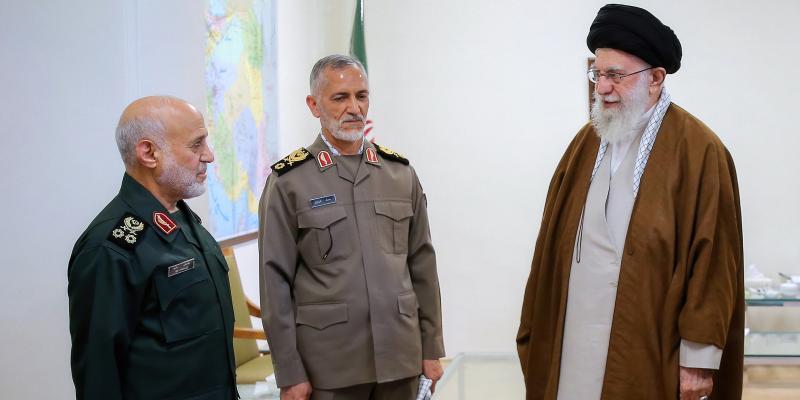
Geopolitics, asymmetric warfare, and the people. If one were to examine the many scholarly articles of Dr. Gholamali Rashid across military and defense journals, these three concepts would appear more frequently than any others. The veteran commander of the 8-Year Imposed war against the Ba’athist regime in Iraq turned to the field of political geography after the war and pursued its highest academic ranks to the very end. The fusion of battlefield experience, academic study, and the geopolitical perspectives of his specialized discipline ultimately led him to formulate Iran’s theoretical framework for future warfare — the very doctrine that materialized on the battlefield during the Third Imposed War against the American and Zionist enemy.
In the introduction to one of his books, he wrote:
“I have repeatedly emphasized in speeches and meetings the necessity of changing the method through which the Iran-Iraq War is studied and adopting a new perspective toward the experiences of the Sacred Defense era. To overcome the current situation, it appears that the experience of the 8-Year Sacred Defense requires renewed analysis and reassessment, and this demands the use of new research methods to study military-strategic capacities in war.”
He himself was among the first commanders in Iran’s Armed Forces to employ new methods for studying military and strategic capacities in order to strengthen Iran’s resilience in a future war against the United States.
Far from public attention and media spectacle, the quiet commander in the shadows spent the decades after the Sacred Defense within the General Staff of the Armed Forces and the Khatam al-Anbiya Central Headquarters, studying and developing Iran’s future defense strategies. His academic writings in military journals remained intensely focused on this issue. Even within the university environment, the experienced Iranian commander approached scholarship with a deeply problem-oriented mindset.
A glance at some of the titles of the works he contributed to reveals the direction of his thinking:
“The Role of Natural Geopolitical Factors in Formulating the Defensive Strategy of the Islamic Republic of Iran Against American Military Threats Originating from Iraqi Territory,”
“A Theoretical Model for Designing Defense Strategy Based on Geopolitical Factors,”
“Theoretical Explanation of the Impact of Geographic and Geopolitical Factors of Coastal Oceanic Regions on National Security,” “Formulating Comprehensive Defense Strategies for Future Warfare,”
“Characteristics and Components of Intelligent Command and Control on the Battlefield,”
“Political Doctrine and Diplomacy in the Three Recent Wars of Southwest Asia and the Transformation of Military Victories into Political Gains,”
and “Analyzing the Dominant Patterns of Future Warfare and Comparing Them with the Eight-Year War and Recent Conflicts.”
The war-tested commander — a graduate of Tarbiat Modares University and professor at the National Defense University — had reached a central conclusion: in any future war against the United States, Iran must transform its geography and geopolitics into weapons capable of compensating for the technological superiority of the American military.
What unfolded during the recent war along the southern front in the Persian Gulf against American forces reflected portions of his defensive theories finally being implemented in practice. The Iranian commander in the shadows was among the earliest architects of the concepts of non-peer defense and active deterrence in Iran. He believed that preserving security required the simultaneous strengthening of military, cyber, intelligence, and psychological capabilities. Many of the country’s military exercises, air defense systems, and highly sensitive operational plans were designed and executed under his supervision.
Rashid, the 33-year-old from Dezful — whose father, out of devotion to Imam Ali (pbuh), had named all his sons “Ali” — served as Deputy for Operations of the IRGC Joint Staff from 1986 to 1989. He was later transferred to the General Staff of the Armed Forces, where he headed the Intelligence and Operations Division for a decade until 1999. From 1999 to 2016, he served for seventeen years as Deputy Chief of the General Staff of the Armed Forces, and from 2016 until his martyrdom he commanded the Khatam al-Anbiya Central Headquarters — the wartime command center responsible for directing the operational activities of Iran’s armed forces during national crises.
The young commander who, in December 1981, had announced the operation code to his forces with the words:
“In the name of God, the Compassionate, the Merciful. I, Rashid, by the order of the Commander-in-Chief of the IRGC, announce the operation code to all operational units: From Rashid to all units — Ya Hussain (pbuh).”
thus initiating Operation Tariq al-Quds, was martyred forty-four years later, in the dawn hours of June 13, 2025, on the path to Quds and at the hands of the occupiers of Quds, ascending to the highest heavens.
Jun. 15, 2026