

Armenian translation of "Cell No. 14: The Autobiography of Ayatollah Khamenei" unveiled at Yerevan State University: a story of suffering, steadfastness, and hope
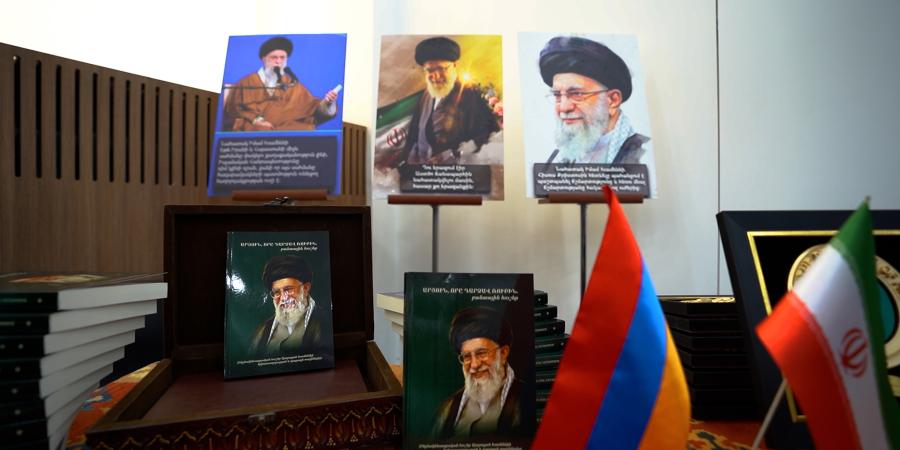
The unveiling ceremony of the Armenian translation of "Cell No. 14: The Autobiography of Ayatollah Khamenei," the autobiographical memoir of Martyr Ayatollah Sayyid Ali Khamenei, was held on Friday, Oct. 9, 2026, at 3 p.m. local time at the Faculty of Oriental Studies of Yerevan State University in Armenia's capital.
The work — which recounts Ayatollah Sayyid Ali Khamenei's memories of his years of political struggle, imprisonment, and torture before the victory of the Islamic Revolution — was translated into Armenian by Maryam Zazian, an Iranologist and translator. This is the twenty-sixth translation of the book into various languages.
The ceremony was organized by the Cultural Chancellery of the Embassy of the Islamic Republic of Iran in Armenia and the Islamic Revolution Institute, in cooperation with the Faculty of Oriental Studies at Yerevan State University. Among the speakers were Ahmad Donyamali, Iran's Minister of Sports and Youth; Mohammad Akhgari, Deputy for International Affairs at the Islamic Revolution Institute; Khalil Shirgholami, Ambassador of the Islamic Republic of Iran to Armenia; Elina Aseryan, Vice-Rector for Academic Affairs at Yerevan State University; Ruben Hovhannisyan Melkonyan, Dean of the Faculty of Oriental Studies; and Vartan Voskanyan, Head of the Iranian Studies Department at the university.
"Cell No. 14: The Autobiography of Ayatollah Khamenei," first published in Arabic under the title "Indeed, with Patience Comes Victory" and later published in Persian, spans fifteen chapters and narrates parts of Ayatollah Sayyid Ali Khamenei's life — from childhood and his studies to his entry into political struggle and his endurance of imprisonment and torture in the years before the victory of the Islamic Revolution.
Ahmad Donyamali: "Cell No. 14" is not a book about an ending — it is about a path
Ahmad Donyamali, Iran's Minister of Sports and Youth, opened his remarks by honoring the memory of Martyr Ayatollah Sayyid Ali Khamenei and the martyrs of the recent wars, and condemned the attacks by the US and the Zionist regime on Iran.
Emphasizing Iran's commitment to peace and its resistance against aggression, he said: "We have always been peace-seeking. But in the face of any aggression or encroachment upon Iran's land and nation, we will stand to the last breath — and, as in the past, we will make the aggressors regret what they have done."
Donyamali also described resistance against foreign domination and support for the Resistance movements as central to Martyr Khamenei's political thought. He stressed the expansion of cultural and people-to-people ties between Iran and Armenia, expressing hope that the Armenian translation would deepen mutual understanding between the two nations and foster cooperation among their universities and youth.
Yerevan University's Vice-Rector: the Armenian translation offers a window into contemporary Iranian history
Elina Aseryan, Vice-Rector for Academic Affairs at Yerevan State University, described the unveiling of the Armenian translation as an important event for better understanding the character of Ayatollah Sayyid Ali Khamenei and the developments of recent decades in the Islamic Republic of Iran.
Noting that the translation was carried out by one of the university's Iranology students, she described the event as a sign of the growing study of Orientalism — and Iranology in particular — at the university.
Aseryan also called the book's unveiling a tribute to Ayatollah Sayyid Ali Khamenei, expressing hope that translating more Persian works into Armenian would open new opportunities for students and the Armenian public to engage with the history of the Islamic Republic of Iran and its literary heritage.
Iran's Ambassador to Armenia: even in its account of pain and prison, the book speaks of love and hope
Khalil Shirgholami, Ambassador of the Islamic Republic of Iran to Armenia, identified as one of the book's most striking features the triumph of a spirit of love and hope over its account of suffering and hardship.
"Even when the book speaks of pain, torture, and prison," he said, "we clearly see that it speaks of love and hope far more than of pain and suffering."
Noting that the work recounts part of Iran's contemporary history through personal memoir and in a simple, intimate language, Shirgholami added that the book addresses a period of Ayatollah Khamenei's life less known than the post-Revolution years — a period encompassing political activity, imprisonment, torture, and the hardships he and his family endured before the Revolution's victory.
Referring to a passage in the book about Ayatollah Khamenei's family, he recalled how the leader's child prayed at the shrine of Imam Reza (pbuh) for his father's release from prison — and how he was freed two days later.
Shirgholami stressed that the significance of these memoirs transcends national borders: "This book is the memoir of a legend — and legends do not belong to one nation. Legends belong to all of humanity."
He expressed hope that the Armenian translation would give the people of Armenia greater familiarity with Iran's history and experience of political struggle, and that its account of hardship transformed into achievement and victory would inspire its readers.
Melkonyan: the life of Iran's martyred Leader was bound to struggle from beginning to end
Ruben Melkonyan, Dean of the Faculty of Oriental Studies at Yerevan State University, reflecting on the book's content, said: an acquaintance with the life and character of the martyred Leader of the Islamic Republic of Iran shows that his life, from beginning to end, was bound to struggle, to adherence to national and civilizational values, and to the defense of his convictions.
Describing struggle as inseparable from Ayatollah Sayyid Ali Khamenei's life, he added that heroes typically end their lives as they lived them — and that the martyred Leader of the Islamic Republic walked the path of struggle throughout his life and remained faithful to his national and civilizational values.
Melkonyan also touched on the place of martyrdom in different cultures, noting that in historical and mythical narratives, martyrdom in defense of homeland and national values holds a special place — a concept also found in the history and culture of the Armenian people.
Referring to Armenian heroes who gave their lives in defense of their country and national values, he described respect for martyrs and the preservation of their memory as a shared cultural feature of the Iranian and Armenian peoples. Melkonyan listed the preservation of historical memory and respect for martyrs as among the book's key messages, and invited students to read it.
He also thanked Maryam Zazian, the book's Armenian translator, saying she had undertaken the difficult task of translating the work and completed it with care and quality.
Head of Yerevan University's Iranian Studies Department: Iranian civilization knows no language of force or imposition
Vartan Voskanyan, Head of the Iranian Studies Department at Yerevan State University, emphasized the place of culture and civilization in Ayatollah Sayyid Ali Khamenei's thought and in the historical relations between Iran and Armenia.
Referring to his views on Iran's historical role in the region, he said that the Iranian civilizational sphere is not defined by force, pressure, or imposition — rather, cultural and civilizational ties are the primary language of communication among the peoples of this sphere. "Iran knows neither the language of force, nor the language of imposition, nor the language of pressure," Voskanyan said. "The Iranian civilizational sphere knows only one language — and that is the language of civilization and culture."
Noting the long history of the Iran-Armenia border and the cultural interaction between the two countries, he described translating Persian works into Armenian as an effective step toward strengthening mutual understanding. Voskanyan added that the Armenian language has coexisted and interacted with Persian for more than 2,500 years, and that publishing such works can help sustain the cultural and civilizational ties between the two peoples.
Mohammad Akhgari: the book is a narrative of will and steadfastness on the path of history
Mohammad Akhgari, Deputy for International Affairs at the Islamic Revolution Institute, thanked Yerevan State University for hosting the event and the Cultural Chancellery of the Islamic Republic of Iran in Armenia for organizing the unveiling.
Noting that the book had been published in 25 languages before the Armenian translation, he said that with this edition, the number of languages into which the work has been translated reaches 26.
Describing the book's content, Akhgari characterized it as more than a collection of memoirs: "'Cell No. 14: The Autobiography of Ayatollah Khamenei' is not merely a collection of memories. It is the genealogy of a will and the spiritual journey of a man who, from the darkness of lightless cells, opened the way toward the dawn of freedom."
The unveiling ceremony of the Armenian translation of "Cell No. 14: The Autobiography of Ayatollah Khamenei" concluded with speakers emphasizing the capacity of literature and translation to introduce contemporary Iranian history and to expand cultural and academic ties between Iran and Armenia.
Oct. 10, 2026