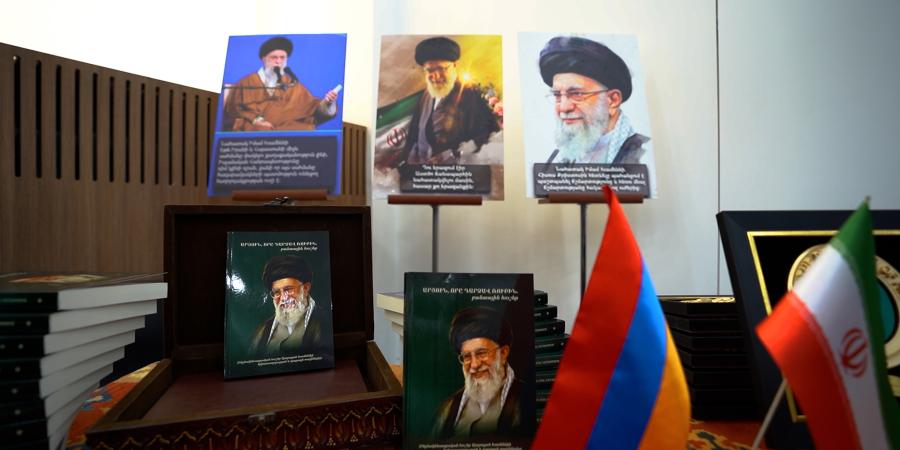
Sports Minister at the unveiling ceremony of the Armenian translation of “Cell No. 14: The Autobiography of Ayatollah Khamenei”:
May the memory of our martyred Leader be cherished; Iran is peace-loving, but it will make any aggressor regret its actions
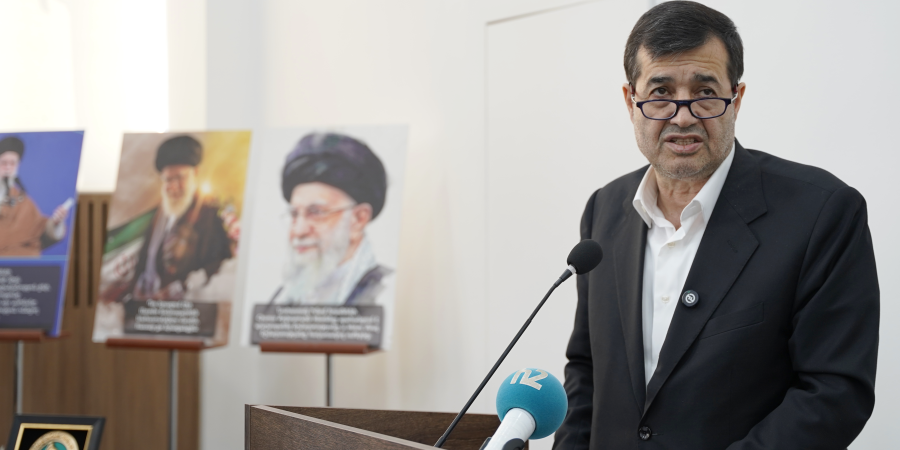
At the unveiling ceremony of the Armenian translation of the book “Cell No. 14: The Autobiography of Ayatollah Khamenei,” held on Friday, October 9, at Yerevan State University in Armenia, Iran’s Minister of Sports and Youth, Ahmad Donyamali, began his remarks by paying tribute to Martyr Khamenei and the martyrs of the recent wars, and condemning the attacks by the US and the Zionist regime against Iran. He said, “Once again, I unequivocally condemn the cowardly attacks of global arrogance against our beloved Iran, and I declare to the world that we have always been peace-loving; however, we will stand firm to the last breath against any aggression or violation directed at the land and people of Iran, and, as in the past, we will make the aggressors regret their actions.”
Iran’s Minister of Sports and Youth says the book “Cell No. 14: The Autobiography of Ayatollah Khamenei” is not the account of an ending, but rather the account of a journey that begins in a simple home and reaches the days when the history of Iran enters a new phase.
Speaking at the unveiling ceremony of the Armenian translation of “Cell No. 14: The Autobiography of Ayatollah Khamenei” at Yerevan State University, Ahmad Donyamali said the significance of this work lies in its account of the distance between Ayatollah Sayyid Ali Khamenei’s youth and the figure who later played a decisive role in Iran’s political developments.
Donyamali added that the value of this account lies not only in understanding the starting and ending points of this journey, but also in observing the years marked by “patience, solitude, choices, and paying the price.”
Referring to the book, which deals with Ayatollah Sayyid Ali Khamenei’s youth, Iran’s Minister of Sports and Youth said the work takes readers back to a period when his future political standing had not yet taken shape; a time when, according to Donyamali, study, literature, teaching, engagement with the people, and gradual involvement in social and political issues constituted a significant part of his life.
He said that young people are not merely “the future generation,” but “the owners of the present” and must play an active role in universities, science, sports, culture, and social activities.
Donyamali also described “resistance to foreign domination” as one of the prominent themes in Martyr Khamenei’s political thought, saying that confronting global arrogance and supporting resistance movements had occupied a central place in his international policy.
In another part of his remarks, he said that within this framework of thought, acceptance of social, religious, and political differences within the country finds meaning alongside preserving independence and confronting attempts by foreign powers to impose their will.
In conclusion, Donyamali stressed the importance of expanding cultural and people-to-people relations between Iran and Armenia, expressing hope that the publication of the Armenian translation of this book would pave the way for greater mutual understanding between the two nations and the development of cooperation between universities and young people in the two countries.
He said this connection could “begin with a book, reach the university, continue through culture, and find new meaning in sports, friendship, and cooperation among the young people of the two countries.”
Oct. 9, 2026