News
“Cell No. 14: The Autobiography of Ayatollah Khamenei”: Ambassador of justice, a book for life, the best source to understand the Islamic Revolution
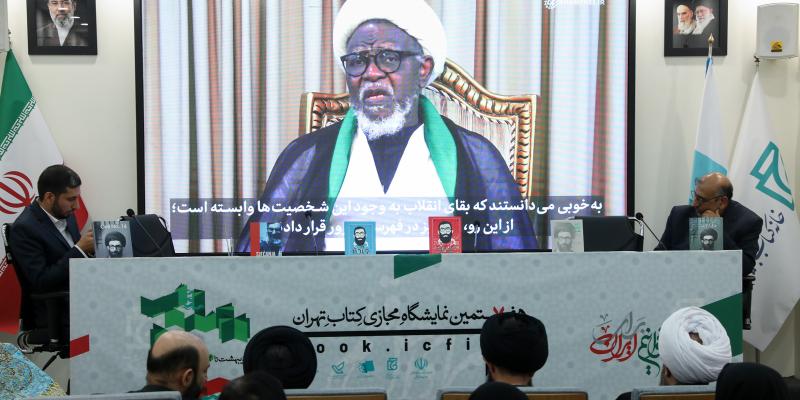
The unveiling ceremony of the Hausa, German, and Kazakh translations of the book "Cell No. 14: The Autobiography of Ayatollah Khamenei" was held on May 18, 2026, in Tehran, with the participation of scholars, cultural activists, and religious and international figures.
During the event, speakers addressed various aspects of the book’s international translation and publication and discussed its impact on global audiences. Sheikh Ibrahim Zakzaky, leader of the Islamic Movement in Nigeria, also sent a video message to the ceremony.
Sayyid Komeil Bagherzadeh, former cultural attaché of Iran in Lebanon, spoke about his experience reading the first Arabic edition of the book prior to its publication. He explained the process of compiling the work based on audio recordings of private sessions of Martyr Khamenei and Dr. Mohammad Ali Azarshab, professor of Arabic language and literature at the University of Tehran, who played a key role in preparing and editing the Arabic edition of Cell No. 14: The Autobiography of Ayatollah Khamenei. Bagherzadeh also discussed the illustration stages and the Persian and English translations of the book.
Recalling the first presentation of the book, he shared memories of Martyr Sayyid Hassan Nasrallah regarding the work: “It was decided that this book should be introduced and unveiled for the first time by someone whose audience spans the entire Arab world. Therefore, we asked Martyr Sayyid Hassan Nasrallah to read the book and, upon approval, present it during his speech on the 40th anniversary of the Islamic Revolution in Iran… and that is exactly what happened.”
Bagherzadeh further recounted a memory of Martyr Nasrallah, who said that he had read the book "from beginning to end in a single sitting" and considered it a model for writing memoirs and narrating historical events. According to him, the book has become an educational and inspirational work for Hezbollah’s youth at various stages of life.
Hujjat al‑Islam wal‑Muslimin Naji, director of the Nasim Rahmat Cultural Institute and responsible for the Spanish and Portuguese translations of the book, described Cell No. 14: The Autobiography of Ayatollah Khamenei as “an ambassador of the justice-seeking spirit of the Iranian people” on the international stage. Referring to the message of the martyred Leader at the unveiling of the Spanish edition, he noted that the message brought new energy into the publication process, and that the illustration, translation, and publication of the book have transformed many individuals.
He also described the publication as an effort to create bonds among justice-seeking peoples and shared memories of the book’s unveiling in the Colombian parliament and universities, as well as its impact on youth and religious and social figures in South America.
Dr. Hossein Mohammadisirat, faculty member at Imam Sadiq (pbuh) University, emphasized that each translation brings its own unique narratives and experiences. He described the “autobiographical” format as an effective model for international publication, capable of attracting audiences from diverse cultural backgrounds.
He further highlighted the book’s portrayal of balance between “struggle” and “knowledge” in Martyr Khamenei’s character as one of its most remarkable features and described Cell No. 14: The Autobiography of Ayatollah Khamenei as a model for introducing the Islamic Revolution and the Islamic way of life. Mohammadi-Sirat also recounted a memory of an Italian writer who, after reading the book and the Leader’s descriptions of his mother and wife, felt admiration for the status of Iranian Muslim women.
Dr. Omid Rezaei, researcher on African affairs, discussed the concept of martyrdom in the martyred Leader’s ideological framework and its impact on the Islamic movement in Nigeria. He highlighted the influence of Martyr Khamenei and the Islamic Revolution on Islamic currents across Africa and noted the emergence of multi-million-member communities in the continent founded on anti-imperialist and martyrdom-oriented principles.
He also praised the selection of this book for the Hausa-speaking community, noting that the martyred Leader’s ideas have been widely received by Hausa-speaking audiences. According to him, Hausa is the native language of over twenty million people in Africa.
At the conclusion of the ceremony, with the presence of Dr. Fatemeh Mohajerani, Spokesperson of the Government of the Islamic Republic of Iran, the Hausa, German, and Kazakh translations of Cell No. 14: The Autobiography of Ayatollah Khamenei were officially unveiled.
In an interview on the sidelines of the event, Dr. Mohajerani highlighted the absence of this book-reading Leader, Martyr Khamenei, particularly during the book fair season, and emphasized the necessity of translating works that introduce the character of the leaders of the Islamic Revolution to the world.
May. 18, 2026