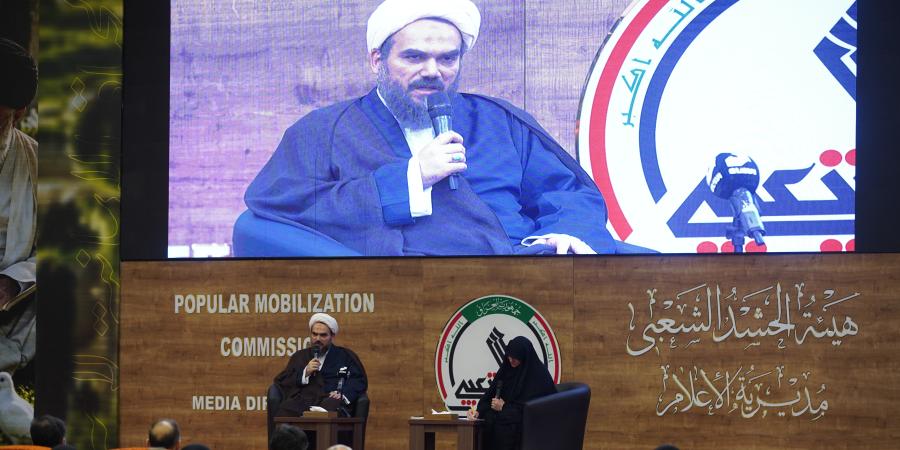
A glimpse of Ayatollah Sayyid Mojtaba Hosseini Khamenei’s memories of the martyred Leader
The man who lived simply all his life, yet shook the glittering foundations of arrogance and global domination
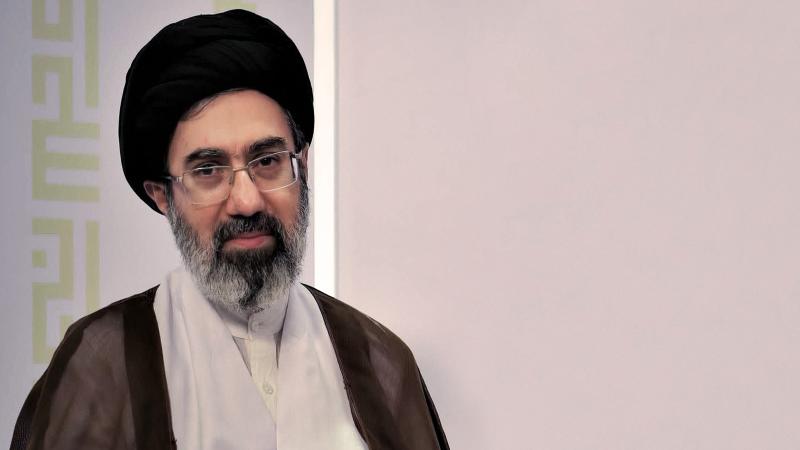
Read the 2021 Khamenei.ir interview with Imam Sayyid Mojtaba Khamenei—the only interview the Leader of the Islamic Revolution has given to date.
What follows are excerpts from the only interview that the Leader of the Islamic Revolution, Imam Sayyid Mojtaba Hosseini Khamenei, has given to date. Throughout all these years, he has refrained from appearing in the media or giving interviews of any kind. Even on this exceptional occasion, which took place on the eve of a commemoration honoring the scholarly and spiritual stature of Ayatollah Sayyid Javad Khamenei (ra), he agreed to the interview solely in order to fulfill a duty and pay tribute to the personality of his late grandfather, Ayatollah Haj Sayyid Javad Khamenei.
This interview, conducted in 2021, spanned several hours. In the course of the discussion about the late Ayatollah Sayyid Javad Khamenei, various topics came up – including personal recollections as well as some of the exceptional and unparalleled qualities of the martyred Leader of the Islamic Revolution. Yet, even as he answered the questions, he would repeatedly emphasize that the primary focus of the conversation was that devout and God-fearing scholar, steering the discussion back to the main subject. For this reason, he was not, in essence, aiming to describe or expound upon the various dimensions of the martyred Leader of the Islamic Revolution’s personality. Even so, the interview contains remarks that are highly engaging and worthy of attention. For this reason, we have selected those sections – mostly concerning the martyred Leader of the Islamic Revolution – for the readers of KHAMENEI.IR. The full text of this interview will be published, God willing, in a commemorative volume honoring Ayatollah Sayyid Javad Khamenei (may his soul be sanctified), titled Sahifeh-ye Parsayi, by Islamic Revolution Publications.
Question: One of the points frequently mentioned in the oral recollections of your uncles and brothers is the special admiration and closeness that the late Ayatollah Sayyid Javad had toward Imam Khamenei. Do you also recall any particular instance or detail in this regard?
Imam Sayyid Mojtaba Khamenei: The Leader had a very affectionate and close relationship with his father. Of course, fathers and their children typically enjoy a close emotional bond, but as you noted, the relationship between the late Ayatollah and my father didn’t seem to have been merely an emotional one; it appears to have gone beyond that. Perhaps a major reason for this relates to certain things my father had done that, as they say, had greatly impressed the late Ayatollah. For instance, it seems that at a remarkably young age, my father apparently had two students – both older than him – who would come to him to study. And evidently, one of these individuals later invited him to speak and explain religious rulings at a women’s mourning assembly.
At that time, in such gatherings a person would recite religious rulings from books written in a question-and-answer format. The modern style of Risalah-ye Tawzih al-Masaʾil had not yet become common. Apparently, that format only became widespread during the time of Ayatollah Borujerdi. I myself once had two such question-and-answer books from my maternal grandfather’s library. In any event, he was a businessman in the Bazaar and owned these books – one was the question-and-answer work of the late Ayatollah Sayyid Abul-Hasan, and the other belonged to Ayatollah Sheikh Abdul-Karim Haeri. In any case, my father apparently took one of those question-and-answer books from his late father, who provided him with some guidance and explanation. He then went to the gathering and handled the matter successfully. At that time my father was around twelve or thirteen years old. Naturally, incidents like these would have left a lasting impression on the mind of the late Ayatollah [Sayyid Javad Khamenei].
Another point was my father’s evident scholarly ability at that young age. The emergence of his academic talent must also have influenced the late Ayatollah’s perception of him. It seems that when the late Ayatollah was teaching him Sharh al-Lumʿah, he noticed my father’s quick and insightful responses in class and remarked that “Ali-Agha is a mujtahid.” Naturally, such a statement at that age was not meant as a literal confirmation of ijtihad in its conventional sense, since my father later spent many years studying under numerous eminent scholars. Rather, it was a form of praise and admiration for my father’s scholarly caliber – meaning that if he continued along this path, he would most likely reach the recognized level of ijtihad within a relatively short period of time.
Moreover, he displayed remarkable obedience toward his father and accompanied him in various other matters, such as visits to the shrine [of Imam Reza]. It seems that when the late Ayatollah would set out to visit the shrine, my father – during his teenage years – would sometimes join him. Along the way people would greet the late Ayatollah, but since he would often be engaged in supererogatory prayers or recitation of dhikr, my father would respond to their greetings. The late Ayatollah was very devoted to voluntary prayers [Nawafil] and recommended acts of worship [Mustahabbat]. My father used to say that he had recited Ziyarat Jami’ah Kabirah so many times during visits with his father that he eventually memorized it.
In any case, this provided my father with greater opportunities than the other children to serve his father. For instance, he was committed to visiting his father’s home every day. They would sit together, read books, and engage in discussions. Because of the shared atmosphere of scholarly life, they had a deeper intellectual rapport as well. So, beyond the emotional bond, there was also a natural scholarly connection between them.
My father once told us a story from his time as President. It was his habit to call his parents every few days to speak with them and check on them. One day he spoke with his father for a few minutes before saying goodbye. The late Ayatollah also bid farewell. Then, assuming the call had ended, he spoke very softly – as though murmuring to himself – in his sweet Turkish accent: “I love you, Ali.” He thought the phone had been put down, but my father was still holding the receiver in his hand and clearly heard those words.
Altogether, these kinds of moments, beyond the ordinary father-son relationship, produce lasting effects. All of these things contributed to the emotional bond between them.
Of course, perhaps the most significant factor was the well-known episode of the late Ayatollah’s blindness, which led Imam Khamenei to leave his studies in Qom and return to Mashhad to help his father. This must certainly have had a profound effect on the emotional bond between them. In the early 1960s, my grandfather developed cataracts and glaucoma, that posed real danger and necessitated someone to remain constantly by his side to assist, care for, and manage his needs. My Uncle Mohammad had just been married. My aunt – who was older than Uncle Hadi – was still a teenager. The younger sons, such as Uncle Hadi, were also too young. Naturally, the first person who could assume that responsibility was my father. However, at that time he was in Qom and was doing very well academically, studying seriously and attending various lessons, including those of Ayatollah Borujerdi. In fact, it is said that his notes from Ayatollah Borujerdi’s class were among those selected as outstanding and he even received commendation and praise for them.
He also attended the classes of the late Imam [Khomeini] and the late [Ayatollah] Damad, both of which he greatly enjoyed. Imam Khomeini’s class was very crowded, and my father was very fond of it. Ayatollah Damad’s class was smaller, but his discussions were very deep. He also attended the class of the late [Ayatollah] Morteza Haeri, which was extremely small. At one point, it was apparently just my father himself. That is, the class had only one student. The late Mr. Haeri was very fond of him, and he would even give his own notes to my father for him to benefit from them.
When my father decided to return to Mashhad, some of his teachers, including the late Haj Aqa Morteza, were not pleased with his decision to leave. Of course, some of the scholars in Qom would praise him, saying that he would either become the main leader or the leader of Khorasan, by which they meant a Religious Authority (Marjaʿiyyah). These matters clearly reflect the degree of his scholarly progress and advancement in Qom.
Therefore, he wasn’t certain about what he should do. At the same time, he felt a deep sense of responsibility toward his father. During that period, he came to Tehran and visited the home of the late Aqa Zia Amoli, the son of Sheikh Mohammad-Taqi Amoli, with whom he was in contact and had a close relationship. My father told him, “Whenever I look at the matter, I see that both my worldly life and my Hereafter lie in Qom. But my father’s condition is like that.” The late Aqa Zia responded, “If God wills, He will arrange for both your worldly life and your Hereafter in Mashhad.” My father said that as soon as he heard those words, he thought, “How interesting! I already knew this myself, but why didn’t I pay attention to it?” And so, right there and then, he was able to easily decided to return to Mashhad.
What’s interesting is that after making this decision, doors began opening for him one after another – in teaching, in mosques, in delivering sermons, etc.
Question: So was it after this decision that his preaching in Mashhad’s mosques greatly increased?
Imam Sayyid Mojtaba Khamenei: Yes, for as long as I can remember, he was active in two mosques. One was the Karamat Mosque, which had somewhat a central position, and the other was the Imam Hassan (pbuh) Mosque, which was later expanded. The Imam Hassan (pbuh) Mosque became one of the main centers where activists gathered in the period before the Revolution – a hub of resistance for active seminary students and university students. One scene that happened repeatedly and that I still remember vividly was my father standing and delivering a speech while many people held their tape recorders high in the air to record his voice. After his speeches, people would gather around him and it would become very crowded.
Question: So was it Imam Khamenei’s return to Mashhad for the sake of his father that laid the groundwork for his subsequent successes?
Imam Sayyid Mojtaba Khamenei: Naturally, such assistance doesn’t go unanswered. In any case, the step he took for his father would inevitably have had its effect in his life even if the late Ayatollah himself had not noticed it, but he certainly did notice it. The effect of serving one’s parents may manifest itself differently for different people. For example, our Uncle Hassan remained in Mashhad with the late Ayatollah and his wife when everyone else had to move to Tehran. He himself used to say that the result of him serving his parents was that he enjoyed a life of great comfort and peace.
Question: What was the scholarly relationship between the Leader of the Islamic Revolution and the late Ayatollah Sayyid Javad Khamenei? Please tell us a bit about the scholarly relationship he shared with his father
Imam Sayyid Mojtaba Khamenei: It seems that the late Ayatollah [Sayyid Javad Khamenei] initially taught one lesson to my uncle, Sayyid Mohammad, and a lower-level lesson to my father. After some time, the lessons for these two people were merged, and both studied Sharh al-Lum’ah together under the late Ayatollah [Sayyid Javad Khamenei].
My father used to say that during one period in time, when he was returning from Ayatollah Milani’s class and his father was returning from the shrine after prayer, they would meet each other along the way. He said, “My father would ask me what Ayatollah Milani had said in class that day. I would then begin recounting the lecture, and he would add points to complete or explain it.” In fact, he did this deliberately so that my father would immediately engage in a kind of scholarly discussion with a senior scholar right after that important lesson and he could add some points. This process is extremely effective. It engraves the material in a person’s mind, and if this is done consistently, it has significant, numerous benefits. Apparently, this practice continued for some time.
Sometimes even at that young age, my father would participate in his father’s scholarly discussions – both in formal group discussions and other discussions – and he would offer his own opinion too. There were recollections about these participations. For instance, once he accompanied his father to the home of Aqa Sayyid Hashem. During the visit, the late Sayyid Hashem raised a scholarly question, and my father debated the matter with him. After they left, the late [Sayyid Javad Khamenei] asked my father, “Why did you debate with him like that?” Of course, the late [Sayyid Javad Khamenei] wasn’t objecting to the content of my father’s remarks, but rather to the manner in which he had addressed the late Sayyid Hashem.
Once I asked my father, “Sayyid Hashem was a student of Ayatollah Naini, and the late Ayatollah [Sayyid Javad Khamenei] was also his student. Have you ever compared these two from a scholarly standpoint?” My father told me that some people believed the late Ayatollah [Sayyid Javad Khamenei] was very different, and that he was significantly stronger academically and superior in that respect. Of course, Sayyid Hashem was about ten years older and was the same age as the late Ayatollah Hakim. According to the late Ayatollah Vaez-Zadeh, he had also studied alongside Ayatollah Hakim in Najaf at one time.
On another occasion, Imam Khamenei said that his father was deeply fond of studying – especially studying jurisprudence – until the very end of his life. One of his admirable moral traits was that when he was teaching Kifayat, he would sometimes say, “I explained this incorrectly.” Most people don’t say such things. For example, if someone makes a mistake during a sermon, he may subtly correct it later in a way that the audience doesn’t notice it. But in teaching, openly admitting that one has made a mistake is difficult. If someone does this frequently, it may appear to undermine his authority, so people often tend to avoid doing this. They may even try to justify their mistake.
Question: My next question is more analytical than anecdotal. Based on what you mentioned, in what characteristics do you think Imam Khamenei has been influenced by his father?
Imam Sayyid Mojtaba Khamenei: That is a somewhat difficult question to answer. Perhaps his commitment to the nawafil [supererogatory prayers] and similar practices comes from his father.
Question: To phrase the question more precisely, what I meant was “similarities.” In your opinion, what similarities exist between these two noble figures?
Imam Sayyid Mojtaba Khamenei: One similarity may be their asceticism. It should be explained that the late Ayatollah [Sayyid Javad Khamenei] was both ascetic and materially poor. However, my late grandfather did not become ascetic out of necessity or poverty. Likewise, my father’s asceticism is entirely a matter of deliberate choice. He does not receive any conventional salary whatsoever. For instance, there was a time when I wanted – purely out of caution – to hand over a certain sum of money to the Office from my own personal funds. One of the Office staff told me that Imam Khamenei had recently given a similar amount for his own personal expenses. Of course, he would not take money from the public treasury only to give it back to the treasury; rather, these funds come from the voluntary donations and offerings that individuals make personally in his name.
The same applies to gifts that people bring out of love and admiration for him. For instance, about thirty years ago some brothers from Yemen brought him a large tin container filled with Yemeni agate stones. Alongside it were several boxes containing particularly rare stones that experts said were extremely valuable. He gave all of them away. On another occasion someone brought him a very fine and expensive jubbah. He ordered it to be sold, and with the proceeds several jubbahs were purchased and given as gifts to different people. Material issues have never held any importance for him. Although he has many legitimate avenues through which he could benefit materially, he never does.
My father would usually give away the valuable gifts that were personally presented to him to the Astan-e Quds Razavi [the endowment organization managing Imam Reza’s Shrine in Mashhad]. Many handwritten books are gifted to him, and he generally entrusts them there. One prominent contemporary calligraphy master once sent him a beautifully written Divan of Hafez in the shekasteh-nasta’liq script of Vesal Shirazi. I once wanted to show it to someone but found it missing. Eventually it turned out that my father had donated it – like all the other fine and beautiful items – to Astan-e Quds. He does not personally keep or use such things at all. He generally gifts anything that is fine and valuable to Astan-e Quds.
Let me tell you a story here. When I was a child, I hated the word “poor.” I was young and imagined a poor person as someone sitting in a corner on the street begging. At that time, the Revolution had not yet triumphed, and I was in second grade of elementary school. We were living in Mashhad, in the very same house that still exists today. I remember that in one corner of the house there were packages of food supplies and vegetable oil. We – three children, along with our father and mother – were sitting and talking when in the midst of the conversation, my father said: “I’m proud to be poor!” The moment he said this, the sentence struck me so hard that my entire perception of poverty suddenly changed, so much so that to this day, I remain the same way. In a sense, this reflects his detachment from the world from the earliest stages of his life and his renunciation [of worldly attachments].
Question: In an interview shortly after the victory of the Revolution, Imam Khamenei says that because he does not want poverty to be displayed, he will not recount the memories of his own life, and he moves on. If you think it appropriate, could you please tell us more about this?
Imam Sayyid Mojtaba Khamenei: He simply does not allow his life to take on any form of luxury or ostentation. For example, his household items are extremely simple. Take their stove, for example: it is one of those old three-burner tabletop gas stoves. I personally asked my mother several times to replace it. But in this regard, my mother is truly no less committed than him. Even to this day, their gas stove is still that same old three-burner model that is placed on the table. Despite our repeated insistence, my mother ultimately refused and said it simply wasn’t possible.
Until a few years ago, the television set in his home was also one of those very old models. At one point, we bought a receiver. At the time it cost around 50,000 tomans, and I went to connect it to the television. My father was busy praying. I noticed that the television was so old that it didn’t even have an input port for the device. Our own television is old as well, but it has a port for the plug. We had never imagined that his set would be so outdated that it wouldn’t even support an input connection. After that, the television was effectively unusable, and a few years later it was replaced with one of the ordinary televisions that have since become common and can receive a few channels.
Another example is that since around the year 1380 SH [2001 CE] because of his back pain, he has been required – on medical advice – to sit on a chair. Even between the two daily prayers, he must sit on a chair and practically does not sit on the floor at all. My mother also suffers from back pain. Yet the chairs and table in his home are plastic, like the kind used in shops that want to avoid the extra expense of wooden or metal furniture but still need seating. They have purchased a number of these plastic chairs and stacked them in a corner of a back room, to be arranged around the room whenever more seating is needed for guests.
Among such old items, there’s also his bed. The bed he currently sleeps on is the very same one he has used since 1981, following the assassination attempt in which he was injured. He has now been using it for about forty years. If someone were to sit down with pen and paper, they could probably list more than fifteen such old household items. My mother has also played a very significant role in this regard; she has stood alongside him throughout all these years.
Question: Aside from this feature of asceticism (zuhd), what other similarities exist between Imam Khamenei and his parents?
Imam Sayyid Mojtaba Khamenei: In addition to his political insight, his accumulated experiences, and his meticulous attention to detail, my father also possesses a particular sincerity and warmth. Today, 42 years have passed since the Revolution, and more than 15 years of struggle preceded it. As a result, he has gained wide ranging experience and practice in making sound judgments. But at the same time, he retains a special purity, which in this context refers to his truthfulness and genuineness. This quality perhaps goes back to those two noble figures – his father and mother – because they too possessed this same sincerity. One clear expression of this truthfulness is frankness and straightforwardness in speech.
I have seen this frankness in his mother. For example, if someone was gossiping, she would directly tell them to not gossip, or she would cut the conversation short. I remember when I was a child, I would go with her, my mother, and a few others to a mourning gathering [rawzah] at the beginning of Ahmad Abad Street. Some of the host’s children or other guests weren’t wearing hijab. Right there, she would gently address each of them – using expressions like “my dear daughter” – and speak to them and talk about this matter to the point where they would start wearing the full Islamic dress [chadors] then and there. This was despite the fact that she wasn’t affiliated with any position of power, nor did she have any such backing.
Another example took place when my grandmother came to Tehran. When some women from prominent families learned of her presence there, they would invite her by way of my mother to a women’s gathering. In one of those gatherings, which was held at the home of a prominent figure, they had prepared several types of food for afternoon refreshments. But according to our cultural norms, and especially by my late grandmother’s standards, it was excessive. After the gathering, she privately advised them that they had been wasteful and questioned why they were engaging in such extravagance. She was very direct when it came to enjoining good and forbidding evil.
This same directness exists in my father as well. For example, when he was in exile in Iranshahr, we went to visit him one time. I was in third grade. It was the month of Ramadan, and the weather was hot. I wanted to read a book, but I didn’t have one. At that time, my father had the keys to three libraries in the city, so we went together to choose a book. On the way, we saw a young man eating a sandwich in public. My father admonished him right there. Now he was in exile in that city, but he still didn’t stop forbidding what was wrong.
Question: How about Imam Khamenei’s profound passion for books and reading? Do you think this is also an inherited trait?
Imam Sayyid Mojtaba Khamenei: Well, both his father and mother enjoyed reading. His father is well known in this regard, and his mother was also fond of reading. In fact, I think I once heard her herself say, “I know more hadith than Agha.” She was referring to our grandfather. Perhaps what she meant was that she had mastery in certain areas. For example, the late Ayatollah [Sayyid Javad Khamenei] had specialized more in jurisprudence, and she knew hadith. Even so, I believe the great interest in books and reading that my father possesses can truly be described as something innate to him personally.
It may interest you to know that when my father was around 12 or 13 years old, he would sometimes visit stores that sold worn-out, second-hand books. He would sift through them and pick out those that were useful. He would then bind them himself and take them to read. Even now, I have a copy of Nisab al-Sibyan from that period, which he personally bound. This book may be considered to be one of the earliest instructional texts, and I have it among the volumes he himself had bound. Once, I was explaining this to one of the office staff members who was helping me organize a room. For example, I said that Imam Khamenei hadn’t had the means to buy books, so he would collect these cheaper, old volumes and bind them himself. As I described this, that person was deeply moved.
Therefore, I believe his habit of reading goes far beyond these factors. For example, reading before sleep is a strongly established routine for him unless unusual circumstances arise. Otherwise, his normal routine involves always going to sleep with a book. The breadth and diversity of his reading, in terms of both subject matter and types of books, is truly remarkable. Even back in his youth, anyone who would see him would find this striking. This impression has also been expressed by people outside the Islamic seminary – people well-versed in literature, poetry, and even intellectual matters.
Question: When was the last time you saw your late grandfather, and how did you learn of his passing?
Imam Sayyid Mojtaba Khamenei: In our family, I was the last one to see the late Ayatollah [Sayyid Javad Khamenei] before he passed away. I was also the last one to see my grandmother. It just happened that way. Two weeks before my grandfather’s passing in late June 1986, I fell ill with a strange illness when at the front lines. It was to the point that anyone who saw me noticed from my very yellow face that I was very sick, and I myself understood from their reactions that my condition was very bad. I was not the type who would usually ask for a leave, but the commander told me that I must return to Tehran. It was the month of Ramadan, and I went on leave because of the commander’s recommendation.
I first went to Tehran. After a few days, I traveled to Mashhad with some friends. I first went to my maternal grandmother’s home, then I went to the home of my paternal grandparents. Due to illness and old age, my grandfather and grandmother were unable to fast, so they had prepared lunch. I too was a traveler in Mashhad and wasn’t fasting. My grandmother told me to stay for lunch, saying, “Today I’ve made rice and meat for Agha. Stay and join us.” I stayed, and they set a table for the three of us. One thing I clearly remember from that day is that my grandfather kept placing meat on my plate and urging me to eat. After the meal, my grandmother told him that I was going to go to the war zone. I said goodbye to my grandfather, and he went to rest. My grandmother usually rested at noon too. I picked up a book to read, and after some time, I said goodbye and left so that I could meet my friends at the arranged time.
After returning to Tehran, I remained there for a few days. Once my leave ended, I returned to the battlefield. Soon after my return, Operation Karbala 1 began. One night after the second phase of the operation when we were returning from the frontlines to the areas that were further back, I found myself thinking of my grandparents. Amid everything happening in the world, a sudden thought crossed my mind. What if the MEK goes to their home, which has no guards, and harms them or even abducts them? What would we do then?! In fact, these thoughts were probably coming to me at the exact hours when my late grandfather had passed away.
I was preoccupied with these thoughts when we reached the tents where we were stationed. I was so exhausted that I couldn’t do anything, and I went to sleep. In that area, there was a river – apparently called the Gavi River – which was quite wide, though the water flowing in it was shallow. The next morning, I went and sat in the water to wash off the mud that was stuck to my head, body, and clothes. Gradually, the other troops began to wake up. Some came and sat in the water like me to clean themselves, while others went about tasks like preparing breakfast.
At that time, someone came toward me from the direction of the tents. Without any preliminaries, he asked, “How is Mohammad-Javad Hosseini Khamenei related to you?”
We didn’t even know our grandfather by the name Mohammad-Javad, but he said Mohammad-Javad! I was trying to figure out who this person could be, and my mind didn’t immediately turn to my late grandfather at all. He asked again, “Who is Ayatollah Sayyid Mohammad-Javad Hosseini Khamenei?”
I said, “He’s my grandfather.”
He suddenly, bluntly said, “He’s passed away!”
I was still sitting in the water. When he said that, I completely fell apart. That young man couldn’t have been more than 17 years old. I don’t know whether he thought he was being amusing or imagined that delivering the news in such a direct way was better somehow. Afterward, he offered his condolences respectfully, and gradually others began coming over one by one to express their condolences as well. Apparently, some of the comrades had turned on the radio to listen to the morning news, and they had announced the passing of the President’s father in the initial bulletins. It seems they also broadcast Imam Khomeini’s message of condolence at that time.
Since the military operation had ended and there was no further task at hand, I obtained permission from the battalion deputy, and I parted from the unit that same afternoon. I made my way to Andimeshk and took a train from there to Tehran. By the time I arrived, it was already the day after the burial of my late grandfather, and my father had already returned from Mashhad. The late Haji Shamqadri, several members of the Revolutionary Guards, and my uncle Agha Mehdi Khojasteh were present. It seems that Haj Agha Mostafa was also with my father in Tehran at the time. I entered the presidential compound, and my father saw me on the veranda and we greeted each other. He was sorrowful and downcast, and this was very evident.
Another memory worth mentioning here is that apparently around that time, my father had a dream in which he saw my late grandfather setting off with a military backpack. Since I myself was at the front at that time, he had assumed that perhaps the interpretation of the dream was that I had been martyred. In fact, amid the chaos of the first night of that operation, the division’s logistics unit had mistakenly registered my name along with that of several other comrades as missing in action.
The late Mr. Hashemi had asked my father, “Did you send Mojtaba to the front?”
My father replied, “Yes.”
He then asked, “Why did you send the child to the front?”
My father asked, “Has something happened?”
Probably to prepare him [for the news of my martyrdom], he said, “No, but there are some reports …”
It had even been mentioned in the Cabinet that the son of Mr. Khamenei has likely been martyred. So some people were thinking like this. Because of this, when I arrived in Tehran, people initially looked at me in an odd way. My father later told me about his dream. It occurred to me that the dream had actually been about my grandfather himself and that it was him who was departing.
In any case, I headed toward Mashhad that same afternoon. My maternal grandmother came to the airport [to meet me], and from there I was taken directly to a funeral ceremony. After the ceremony, we went to my late grandfather’s house, where Mr. Daneshmand, Mr. Lavaei, and others were present. After that, we attended multiple other funeral gatherings, including those held at the Turks’ Mosque and at the Imam Hassan (pbuh) Mosque, which were mosques that my grandfather had used to attend.
My grandfather is buried behind Imam Reza’s (pbuh) shrine. At that time, there were only a few limited available spots reserved for certain scholars. Given that he had never made any plans or expressed any preference regarding his burial place, it seems this was a special grace granted to him. Since the burial site is located in the rear section that’s designated for women, my father can only visit it during the shrine’s ceremonial cleaning event to recite a Fatiha. When my grandmother passed away, she was also buried in that same women’s section but a bit farther away in Dar al-Ziyafah.
I’ve seen good dreams about my late grandfather. One night I dreamed that he had come to lead the congregational prayer. He recited the call to prayer [adhan]. But before reciting the second part [iqamah], there was a dish of dates from which he took one or two dates, which he ate. When I related this dream to my father, he said, “Praise God. This means his prayers have been accepted.”
Question: As the final question, after the passing of your late grandfather, did Imam Khamenei perform any particular acts on his behalf?
Imam Sayyid Mojtaba Khamenei: Yes, both during his lifetime and after his passing. For example, he would perform prayers on his behalf. When we were teenagers, since the morning call to prayer during the earlier months of the year is much earlier and my father was committed to performing the night prayers, we usually didn’t get to see his morning prayer. But in the colder seasons when the morning call to prayer in Tehran was around six o’clock, we would see him pray. Around that time, he would wake us up, we would pray first, have breakfast, and then go to school. Back then, I noticed that after the morning prayer, my father would perform an additional two cycles of prayer.Once I asked him what this prayer was for, and he replied, “This is my daily gift to my mother and father.”
He used to perform this prayer at a time when both of them were still alive. I think he still performs it now but has changed its timing, and he performs it before the morning call to prayer. These days when I had the opportunity to be with him after the morning prayer, I didn’t see him performing it, so it’s likely he’s shifted it to the night.
I’m guessing that after their passing, my father has probably carried out more acts [of worship on their behalf], because he’s committed to performing certain worship acts even for people who are more distantly related – both for the deceased and even for those who are still alive. At times, he prays for the forgiveness of people who may not even have a close or even favorable relationship with him.
Mar. 20, 2026