The philosophy of history in the Islamic view and through the words of Martyr Khamenei
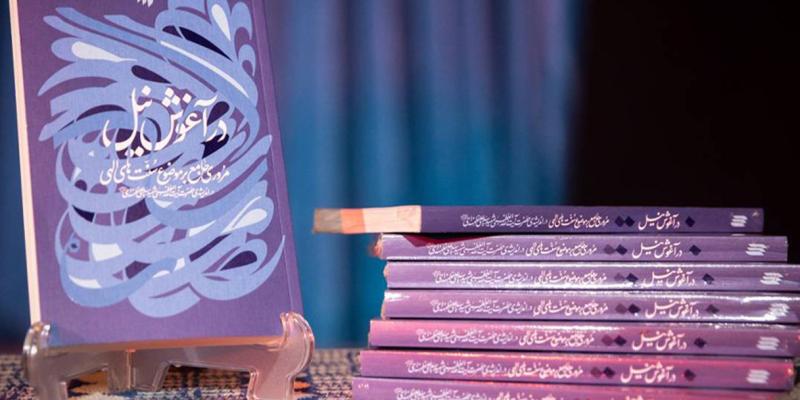
A look at the concept of divine traditions and their reflection in the thought of Martyr Khamenei, in an interview with Mehran Karimi, compiler of the book "In the Embrace of the Nile" and researcher of Islamic culture and thought.
In the Embrace of the Nile is the latest published book concerning the intellectual system of the martyred Leader of the Islamic Revolution, Imam Khamenei. The book’s subject is the discussion of “divine traditions” and “divine promises” in the statements of the martyred Leader.
What is meant by divine traditions? In our world, there are natural and material laws, and there are also laws known as divine traditions.
Natural laws form the foundation of nature and material life — such as the law of gravity, which God created and which scientists gradually continue to discover. In the Islamic view, alongside material laws, there exists another category of laws through which God guides societies, and according to which the general movement of history, populations, and governments proceeds. These laws are neither changeable nor violable; they are eternal. In religious literature, these divine laws are known as “divine traditions” (sunan ilahiyyah). In Islamic thought, this concept holds great importance.
To properly understand the course of historical developments and the movement of history, we must understand the factors and components that drive history forward. Various materialist and non-materialist schools have offered different interpretations of this matter. For example, Marxists believe that the foundation of historical movement lies in material issues, class struggle, means of production, and similar concepts. Other schools also present different ideas according to their own perspectives.
Shia Islamic thought views the movement of history under the umbrella of divine will. In this view, both meta-history and history itself become the unfolding of divine will within human societies. The importance of these traditions is that if governments, societies, and civilizations act according to these undeniable divine laws and align themselves with them, they move toward progress and victory. But if they move against these divine traditions, they fall into defeat, decay, and collapse. Thus, the secret behind the collapse of governments and human societies lies in the nature of their relationship with divine traditions.
As an example, one of the divine traditions is that if believers remain connected to one another and — in the words of the martyred leader — if wilayah (guardianship and mutual loyalty) exists firmly among them, they will overcome their enemies even if they are inferior in numbers and equipment. But if this bond disappears, the enemy will prevail over them.
Another issue is the connection of this concept with the subject of resistance. Today, especially after the events of the Al-Aqsa Flood Operation, the resistance of heroic Gaza and other groups of the Resistance Front — such as Hezbollah, AnsarAllah, and the Iraqi Resistance — have turned the concept of “Resistance” and “Islamic Resistance” into a major keyword and movement in international public discourse.
In his message to American students, the martyred Leader of the Islamic Revolution referred to this concept and described them as a branch of the Resistance Front. If we wish to examine the intellectual foundations of Islamic Resistance, divine traditions are among its most serious foundations. If we look at the battlefield, the Resistance groups and their various branches are certainly at a lower level than states such as the United States and Israel in terms of military equipment and economic power. But what compels them to resist, and why is this resistance accompanied by victory for them? Faith in divine traditions.
This is the ideological and doctrinal foundation of Resistance. In the view of a conscious Muslim who believes in these divine traditions and laws, if a person stands against arrogant and domineering powers, says “no” to them, and strives for divine ideals, then God grants that person support and victory. This is one of the unchanging and undeniable laws of creation. It was one of the principles in which the martyred Leader of the Islamic Revolution, Imam Khamenei, believed on the basis of Quranic teachings.
Similar laws exist regarding subjects such as prayer, unity, and the downfall of arrogant powers — such as the historical story of Pharaoh’s downfall before Prophet Moses (peace be upon him). One of the predictions of the martyred Leader was the inability of arrogant governments and arrogant American presidents to destroy the Islamic Revolution. These themes, drawn from the thought of Martyr Khamenei, are discussed throughout this book.
May. 25, 2026