In an interview with the head of the office of the martyred Leader of the Islamic Revolution:
The martyred Leader would say with utmost courage: “Rest assured, you will be victorious.”
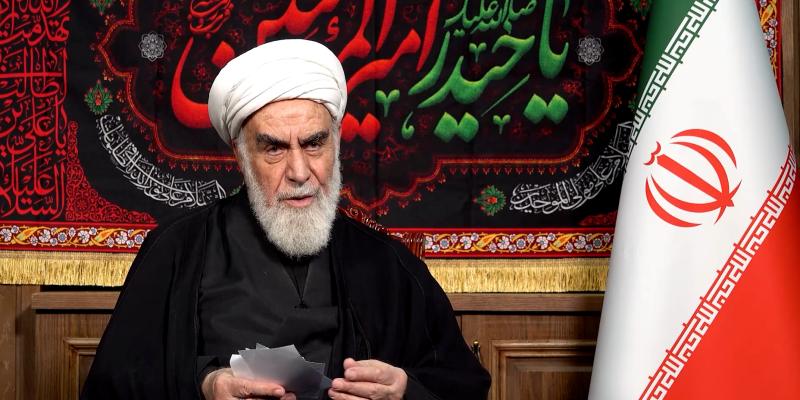
Hujjat al-Islam wal-Muslimeen Mohammad Mohammadi Golpayegani, the head of the office of the martyred Leader of the Islamic Revolution, was among the closest individuals to him. A history of nearly four decades alongside Martyr Khamenei, and of close association with that great figure, provided the possibility of a complete and comprehensive understanding of him. For this reason, KHAMENEI.IR has conducted an interview with the head of the office of the martyred Leader of the Islamic Revolution to examine the characteristics and qualities of Martyr Imam Sayyid Ali Khamenei. This interview was conducted in the first days following the martyrdom of the Leader of the Islamic Revolution, in March 2026.
Question: You were alongside the martyred Leader of the Islamic Revolution for nearly four decades. Where and how did this companionship and acquaintance begin?
Hujjat al-Islam Golpayegani: In the name of God, the Compassionate, the Merciful, and may God's blessings be upon our Master Muhammad and his pure Progeny. I first became acquainted with him in 1979, shortly after the victory of the Islamic Revolution. At the time, I was serving as the representative of Imam Khomeini (ra) at the 8th Tactical Air Base in Isfahan, while he was in Tehran. However, I would coordinate the matters there with him. The atmosphere at the base was extremely toxic; it was a center for the MEK, who openly declared themselves the "classless monotheistic army." After I had spent a year there, I was transferred to Tehran and assumed responsibility for the ideological-political affairs of the Air Force. At that time, the Leader [Martyr Khamenei] oversaw the Office of the Representative of the Wali Faqih in the Army, which was called the "Imam's Advisory Office." Since I had regular contact with him and he knew me well, he assigned me to head a branch of that office within the Air Force. So I transferred from ideological affairs to this advisory office. This responsibility continued until Imam Khomeini passed away and he (Imam Khamenei) assumed the role of Leadership. At that time, he sent me a message saying he wanted to see me and that he had a task for me. When I went to meet him, he said: "Close down that office and come work with me. Come help me." I asked, "What will become of the Imam's Advisory Office?" He replied, "That matter is now entirely moot. Imam has passed away, so the Advisory Office no longer holds any meaning." So I joined him, and for 37 full years throughout his Leadership, I remained at his service.
Question: During this time of companionship, what qualities and characteristics did you see in his personality that stood out most to you?
Hujjat al-Islam Golpayegani: He was a wise scholar, a powerful orator, and an extraordinary statesman. In the official meetings he had with heads of state — whether presidents or other officials — meetings where I was often present, it was completely evident that he was a cut above everyone else. He would speak just a few words, and everyone would be left stunned and impressed. When Mr. Putin, the current President of Russia, came for his first meeting with him, after the meeting ended, he would commend the Leader to me.
He possessed extraordinary intelligence — truly exceptional. He had a remarkably strong memory; memories of the distant past were all preserved in his mind. And he was a rare, unparalleled scholar of rijal (the study of hadith narrators). In the field of rijal, he was exceptional. As you know, one of the prerequisites for ijtihad (independent legal reasoning) is knowledge of rijal. A mujtahid must be familiar with rijal, in order to determine whether a given hadith is authentic or not, and whether its chain of transmission is weak or sound; he must be able to examine all of these matters. In this regard, he was truly one of a kind. Moreover, he was well-acquainted with the great scholars of various eras. For example, if you asked him who Agha Baqer Behbahani was and who his students were, he would list all of his students, as if he had been there and knew them personally.
He was deeply devoted to the Quran; this was something I clearly observed and felt. During the holy month of Ramadan — he is deeply missed now — he was committed to completing two full recitations of the Quran, which he faithfully did: two complete recitations of the entire Quran, every Ramadan. He had fresh interpretations and novel insights into the Quran. All of his peers acknowledged this. He had complete mastery over the verses of the Holy Quran, familiar with its exegeses, and he made use of them.
Furthermore, he was a talented poet. One of our shortcomings is what we call the "veil of contemporaneity." That is, when people like us live alongside an extraordinary individual, we do not recognize him as we should. The passage of time is needed to truly know him. So, the veil of contemporaneity is a real veil. His political responsibility of Leadership had overshadowed his other rare virtues. He was a poet, an orator, a sage, a scholar, a jurist, and a mujtahid; he possessed all of these qualities, but it was primarily his political leadership that was visible to the people. He introduced me to poetry. I, too, occasionally compose a poem, a ghazal. He told me, "You have good poetic talent; read a lot of poetry and compose poetry." And I did just that; sometimes I would compose a ghazal or an ode, recite it to him, and he would praise it and also point out its flaws. He was familiar with the great poets. Every year, when we traveled with him to Mashhad, he would set aside a particular day for the prominent veteran poets and his friends there — there were four individuals in Mashhad who were very distinguished — and he would spend two or three hours with them, talking about the past, reciting poetry, and listening to poetry. Of course, during his lifetime, he deliberately did not share his poems widely. But now that he has passed away, it would be good for those responsible to publish these poems; it would be very fitting.
These were his outstanding qualities. In his personal life as well, there are lessons for all of us. He was opposed to luxury, strongly opposed to extravagance, and he led an extremely simple lifestyle. These were his own words: He would tell me, "All of my personal belongings, aside from my books, would fit in the back of a pickup truck — maybe not even that." He owned many books. He said, "The entire contents of my house would not fill more than one pickup truck!" That’s no joke. We know of many people who were led astray by the allurements of this world. But he pushed back against this world, even as it offered itself to him in full. It reminded me of the words of his ancestor, the Commander of the Faithful [Imam Ali (pbuh)], who said: "O world… go and tempt someone else. I have divorced you three times." Important gifts would come to him from other parts of the world, from various countries, and from within Iran itself. He would not even look at them. He would take only what he needed for his own basic consumption, and send the rest to the Imam Khomeini Relief Foundation or elsewhere. That was his way of life — his own use of such things was very minimal. In short, he was opposed to luxury.
Just look at what extravagance has done to people's lives! If her were to officiate a marriage, he was adamant that the marriage portion [mahr] should not exceed more than fourteen gold coins. Of course, these days the price of fourteen coins is quite considerable but consider their value at that time. If a proposed mahr exceeded fourteen coins, he would not recite the marriage khutba, even if the couple were among his friends or close family. I know of people whom the Leader cared for deeply, who came to him and said, "Please officiate our son or daughter’s marriage — with a mahr of 110 gold coins." He would say, "Kindly go somewhere else. I will not officiate a marriage with a mahr that exceeds fourteen coins." His eldest daughter, who also happened to be my daughter-in-law was martyred in the [US-Israeli] attack. I said to him, "Agha! Here is a pen and a paper. Write whatever you wish for your daughter’s mahr." He replied, "Do you mean to say that I should set for myself something more than what I advise others to do? No. What applies to others applies to me as well. Fourteen coins." That was his way.
Another of his qualities was that he was devoted to Tahajjud [the Night Prayer] and to keeping spiritual vigil through the night. He would typically wake up two hours before the dawn call to prayer [adhan], and every night, in the pre-dawn hours, he would recite Surah Ya-Sin. He would remain awake for a full two hours, secluding himself with his God, supplicating and whispering to Him. He was given to weeping, and he would shed tears at night. This wakefulness would continue until the dawn call to prayer. After performing his Fajr prayer, he would rest briefly, close to sunrise, and then he would come to work.
He was also exceptionally hardworking. He was about 87 years old when he attained martyrdom. Yet, he would say, "I never have enough time — there is too much work and too little time." He was very diligent. He was committed to ensuring that not a moment of his time was wasted in vain and he put a lot of effort into this. For example, he personally assumed the role of Commander-in-Chief of the Armed Forces. Imam Khomeini had delegated the Commander-in-Chief duties to Mr. Hashemi Rafsanjani and Martyr Khamenei and refrained from personally involving himself in these matters. But the Leader personally commanded the forces. One day a week, usually on Sundays, his time was dedicated to the commanders of the Armed Forces — his office staff would have no other dealings with him on that day. He would spend the entire day asking questions, inquiring, investigating, issuing orders, and managing the forces. If you want to truly understand his management capabilities in this field, consider the state of our Armed Forces when he assumed this responsibility, and see how far they advanced by the end of his time. Today, America and Israel tremble with fear. Remember that this is the same Israel that once defeated three major nations in six days: Jordan, Syria, and Egypt — in the famous Six-Day War. What has happened that it now has no peace or security, and its aura of invincibility has been shattered? And not only Israel, but America as well. Who would dare say anything against America? They did whatever they wanted. We anticipate that these developments are the prelude to the reappearance of the Master of the Time, Imam Mahdi (pbuh). In short, he was devoted to Tahajjud and night vigils.
He held the Islamic seminaries [hawzas], especially the seminary of Qom, in special esteem. If it were not for his support, it is difficult to imagine what condition they would be in today. There are individuals in remote towns and villages — someone who led prayers in a mosque for forty years, who was the local scholar — but is now retired, unable to speak, unable to do anything, and no one attends to him. We established a group whose responsibility is to look after such people. They go to, for example, Chabahar or Urmia, and find, say, two scholars who no longer have the energy, or are ill, or need to marry off a daughter but lack the financial means. They assist them, and bring them satisfaction. These people would raise their hands in prayer, saying, "Is there anyone who will come to our aid?" Those were their exact words. So, the seminaries are indebted to him.
He also had a special regard for universities. During the holy month of Ramadan, he would hold sessions lasting several hours in the Hussainiyah for students and the youth. Anyone could say whatever they wished from the microphone; he would listen, then respond, and would break his fast with them. He nurtured these young people, and placed particular emphasis on the youth. That was another of his qualities.
Another testament to his character is his noble children. They embody the kind of companions that Imam Ali (pbuh) urged us to seek: those "whose very sight reminds you of God." I bear witness that the Leader's children are exactly that: luminous faces, with no expectations. We have seen others as well; if we compare them, we’ll find that they are very different, but I will not elaborate further. He has four sons, all of whom are clerics. He also has two daughters. His eldest daughter was my daughter-in-law, and she was martyred. His younger daughter is the wife of Mr. Misbah al-Hoda Baqeri, and Mr. Misbah was also martyred in that incident, and he too is among the martyrs. His eldest daughter, who was my daughter-in-law, had a young daughter. I don’t know if you have seen her picture or not. Whenever the Leader would come to visit, you’d see this child in his arms most of the time. I, too, was her grandfather, but I saw her less often. Martyr Khamenei has a special bond with this child.
He always expressed a deep longing for martyrdom. Do you remember that poem he recited in a particular gathering? "We claimed to be in the front row, yet they picked the martyrs from the back of the assembly." When he reached that line, his voice broke with emotion, and he could not continue. Once, when the topic of martyrdom came up in his presence, I said, "Agha! You have a family; their joy depends on you." He replied, "God willing, we will all be martyred together!”
This is a picture of my granddaughter. Look at her closely — show it clearly. She is an angel. This child is buried in the ground now. I don't know — perhaps she belongs on her mother's chest. What sin had she committed? "And when the infant girl buried alive is asked, for what sin she was killed." (Quran 81:8-9)
In those final months, this child was the Leader's greatest source of joy. Whenever I visited him, I would ask, "How is Zahra Khanum?” Her name was Zahra. Smiling, he would say, "Masha’ Allah, she is a bit naughty.”
Personally, because I was very close to him and had regular contact, I felt in the last two or three months that he was preparing himself. Sometimes that thought would cross my mind. Whenever there was a discussion, and some of the military commanders would come and give their reports, he would say with complete courage: "There is no problem. Rest assured; you will be victorious." And his words had a profound effect on the military commanders. One of his qualities was that he trained military personnel, especially young commanders. During the 12-Day War, many of our best military figures were martyred in a single day. The military commanders who were martyred – including the Commander of the IRGC and others – were important people. Yet, on that very same day, he had qualified successors ready for them, as if he had them in his grasp. Nothing was disrupted.
Question: What do you believe was the source of this steadfastness and strength of will and character?
Hujjat al-Islam Golpayegani: Two factors kept him upright, and these were completely evident to me. First, his trust in God and his good opinion of Him — that God acts upon what He has decreed: "If you support Allah, He will support you." (Quran 47:7) His trust in God was extraordinary. Second, his devotion to the Ahl al-Bayt [the household of the Prophet (pbuh)]. In this regard as well, he was exceptional. You would see that in our office; we held mourning gatherings. The intensity of mourning gatherings for Lady Fatimah Zahra (pbuh) was not like this in the past. He officially and practically held mourning ceremonies for Lady Fatimah Zahra (pbuh) for five full days. On other days as well, he held mourning gatherings in the office for the other infallible Imams (pbuh), and he himself would attend. Among the Infallible Imams — among the Fourteen Infallibles — his greatest attention was devoted to Lady Fatimah Zahra (pbuh), Imam Hussain (pbuh), and Imam Mahdi (aj).
In November this year, I was invited to attend the opening of the sacred courtyard of Lady Fatimah Zahra (pbuh) in Najaf, and I had the honor of visiting the holy shrines in Iraq. When I returned, I went to see the Leader and said, "Agha, while there, I asked Imam Hussain (pbuh), I pleaded with him and begged him so that this blessing would be granted to you to come and pay your respects at the shrine of your grandfather, Imam Hussain (pbuh)." He replied, "God willing, may Allah answer your prayer.”
It was his wish to be able to go there — but it did not happen. He was deeply devoted to Imam Hussain (pbuh) and Imam Mahdi (aj). Every so often, he would quietly go to Jamkaran, sometimes at times when there were not many pilgrims present. We would stay in a corner, and he would be left to himself. We do not know what he would say, but it would take a long time. He would place his forehead on the ground in prostration and seek divine assistance. And there is a narration that says: “Let not our Shi’as think that We have left them to themselves. That is not the case.” In any case, he was committed to these two principles. I wanted to emphasize this: his trust and good opinion of God, and his devotion to the Ahl al-Bayt (pbut) — especially to these three: Lady Fatima Zahra (pbuh), Imam Hussain (pbuh), and Imam Mahdi (aj).
Question: Did he ever speak about the possible situation after his own martyrdom?
Hujjat al-Islam Golpayegani: Sometimes when we asked, he would say, “God will not leave you to your own devices. Don’t worry.” When Imam Khomeini passed away, no one believed things would turn out as they did. He himself was among those who initially voted against his own leadership — you have seen that. Who would have thought that such a precious gem would take on the leadership of the Revolution? He was truly without parallel in the world. As I have said, we are veiled by contemporaneity. Years must pass before his true stature becomes clear. He was a product of Imam Khomeini’s upbringing; he loved the Imam. Every year, on the 14th of Khordad (the anniversary of Imam Khomeini’s demise), at the Imam’s purified shrine, he would speak for over an hour before a crowd of millions — including people from other countries. No one promoted the Imam as much as he did. The worth of gold is known only by the goldsmith, and the worth of the gem is known only by the jeweler.
Interviewer: Thank you for giving us your time.
Hujjat al-Islam Golpayegani: To conclude, I offer my condolences to all our people and to the entire nation. Our nation has truly done everything they could. In the footage that’s been televised every day and night, you see all kinds of people. The people are raising their voices and standing firm behind this flag, despite all the difficulties they face. I extend my condolences to them all. We hope that God, if He wills, will compensate [for this loss] in whatever way He can.
The Prophet (pbuh) said: “The death of a tribe is easier for me to bear than the death of a scholar.” If a whole tribe — thousands of people — were to die, it would be easier for me to bear than the death of a scholar. This is the saying of the Prophet that I have cited. And indeed, Martyr Khamenei was a scholar of great stature.
I would like to thank your media outlet; they have and are doing a very good job. May God grant you success and keep you in good health. Appreciate the blessing you have been given. It might not be a bad idea for me to say this now. In Dua Aliya Mazameen, there is a very interesting phrase. You tell God: “O Lord! Do not take from me the blessings You have bestowed upon me.” God has given you this blessing.
God willing, we hope your successes will multiply, and you young people should appreciate your youth. You are spending your youth in the era of the Islamic Republic. I am not saying that everything is perfect here, but I can at least say that the foundation is sound and the basis is correct. Imam Khomeini did his job and departed, and then praise God, Martyr Khamenei, brought matters to completion one by one, during his lifetime. Praise God.
May God’s greetings, mercy, and blessings be upon you.
May. 25, 2026