News
Chinese translation of "Cell No. 14: The Autobiography of Ayatollah Khamenei" unveiled at the Beijing International Book Fair
Unlike the battlefield, in the vast expanse of soft power conflicts, reactions are not always conventional or predictable. Just as, according to surveys, after the September 11, 2001 attacks, sales of the Quran and interest in a direct understanding of Islam rose sharply, with Western publishers focusing heavily on repeated reprints of this sacred book, the American-Zionist attack on Iran on the 28th of February and the subsequent martyrdom of the Leader of the Ummah, Imam Sayyid Ali Khamenei, similarly spurred public motivation to learn about his personality and to seek a correct understanding of the Islamic Revolution in East Asia.
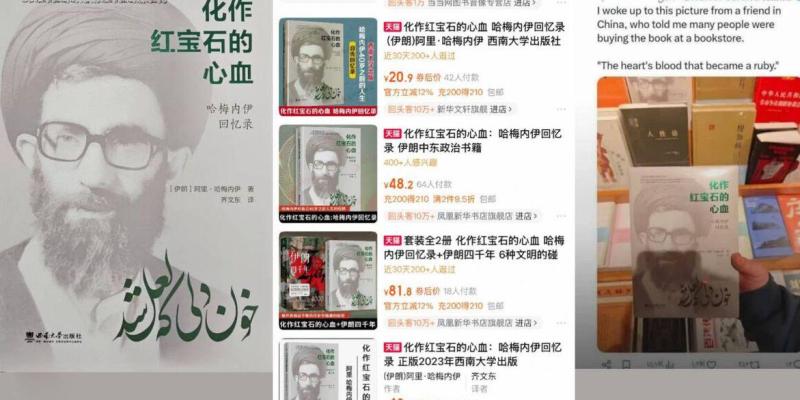
The People’s Republic of China, as the world’s most populous country, in alignment with its strategic and historical interactions with Iran across scientific, cultural, and artistic fields, also pursues long-term and commemorative programs. Among these is the publication of the Chinese translation of the book "Cell No. 14: The Autobiography of Ayatollah Khamenei" following the martyrdom of Iran’s Leader during the Third Imposed War.
The book, translated by Chi Wen Deng, a professor at Beijing International Studies University, was unveiled concurrently with the 30th Beijing International Book Fair and made available in China’s publishing market.
In addition to the 359-page print edition, a digital version has recently been released on China’s online publication platforms, receiving widespread public attention. Excerpts from the book, presented as memoirs, notes, and the candid biography of the martyred Leader of the Islamic Revolution, have circulated on Chinese social media, reflecting strong interest and engagement within China’s digital sphere.
"Cell No. 14: The Autobiography of Ayatollah Khamenei" contains Martyr Khamenei’s recollections from his time in prison and exile during the revolutionary struggle. What sets this book apart from similar works is the wisdom, lessons, and moral insights it conveys, each of which can serve as a guiding light for readers, particularly young people, to understand the atrocities of the Pahlavi regime, the hardships and suffering of the revolutionaries, and, in contrast, their perseverance, resistance, sincerity, and revolutionary faith. The book also includes his autobiographical narrative, relevant photographs, and various indexes as additional sections.
Apr. 29, 2026