

Analysis
Iranian women and the Ramadan war
Maedeh Zaman Fashami, journalist and researcher
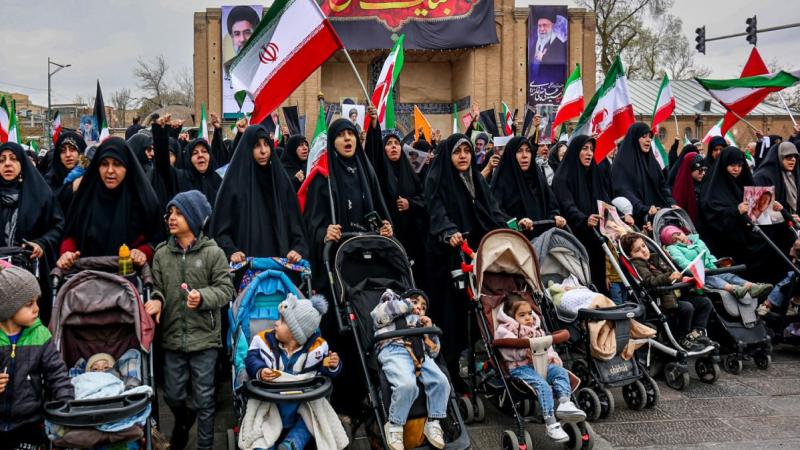
When examining major social and political transformations, one of the most important indicators is the level and quality of women’s participation. The Islamic Revolution of Iran is no exception. Although many official accounts tend to focus on male figures and visible political actions, a closer look shows that women were never on the margins. They stood at the heart of these developments. Their presence was not merely supportive—in many cases, it was driving, stabilizing, and even decisive.
The martyred Leader of the Islamic Revolution, Ayatollah Sayyid Ali Khamenei, by emphasizing figures such as Lady Fatima al-Zahra (pbuh), presented a model in which a Muslim woman could fulfill her family responsibilities while also playing an active role in society. This perspective, in many ways, shaped the intellectual foundation for women’s participation in the Islamic Revolution. Even before the Islamic Revolution, Iranian women played a key role in building intellectual foundations, organizing networks, and sustaining the revolutionary movement. Through their position within the family and society, they became central to spreading the message of the Revolution.
Homes, as the main spaces of connection, were often managed by women. Religious gatherings, cultural circles, and social meetings became places where revolutionary ideas were discussed and explained, and women played a central role in maintaining and expanding these spaces. This was one of the important factors behind the Revolution’s success.
The martyred Leader repeatedly emphasized this point, describing women’s presence in the formation and victory of the Revolution as real and decisive. He once said: “Women active on the front of the Revolution, before its victory, in its early years, and during the 8-Year Imposed War, played very prominent roles. They had a visible and effective presence. This active and visible presence of women must not be allowed to fade. The opponents of the Islamic Revolution are trying to make use of capable women for their own path. The front of the Revolution has many capable, active, articulate, thoughtful, and action-oriented women. The field of defending the Revolution must not be left empty.”
Women’s participation, however, was not limited to cultural and social arenas. Many were present in far more difficult and dangerous fields—from enduring imprisonment and torture to engaging in security and even military activities. This marked an important shift in women’s role—from a “supportive presence” to a “leading presence.”
Their role did not end with the Revolution’s victory; it entered a new phase. In this stage, women played a crucial part in consolidating and institutionalizing its achievements. Their presence in cultural, educational, social, and even political institutions shows the continuity of their active role.
During the eight years of the Imposed War, women again played effective and active roles—both in support positions and in more direct capacities, from working as journalists, doctors, and nurses to providing broad support behind the front lines. Examples such as women serving in the Islamic Consultative Assembly, their work in schools and universities, and their involvement in social institutions all show that women were an inseparable part of building the new system.
In more recent developments—including the 12-Day War and the Third Imposed War—women have once again demonstrated their active and revolutionary presence. From working in sensitive fields like medicine and media to participating in mosques and support networks, much like during the war years, they continue to play important roles.
These wars also have a distinctly female dimension: the visible presence of women in public spaces and their active participation in defending the country. One example of this in the third imposed war is the presence of women as key participants in nighttime gatherings. Women who show up under all circumstances. Over nearly fifty nights of such gatherings, different forms of women’s presence have been seen across the country—from pregnant women to those bringing their infants and young children, to doctors and teachers stepping forward to support their fellow citizens.
The martyred Leader of the Islamic Revolution spoke of what he called the “Third Model of Womanhood”—a model that is “neither Eastern nor Western.” He said: “In the commonly Eastern view, a woman is seen as a marginal figure, without a role in shaping history; and in the commonly Western view, she is reduced to a being whose gender outweighs her humanity, turned into a sexual object serving men and modern capitalism. The courageous women of the Islamic Revolution and the Sacred Defense showed that there is a third model: a woman who is neither Eastern nor Western. The Iranian Muslim woman opened a new path before the women of the world and proved that one can be a woman—modest, dignified, and veiled—while also being present at the center. One can preserve the stronghold of the family and at the same time build new strongholds in the political and social arena, achieving great accomplishments.”
In the end, examining the role of women in the Islamic Revolution of Iran makes one thing clear: Their contribution was not marginal—it was foundational and decisive. Through their presence in the family, society, struggle, and governance, women played an essential role in both the victory and the consolidation of the Revolution.
The views of the martyred leader of the Ummah, with their emphasis on dignity, identity, and women’s capabilities, provide an important framework for understanding this role. Within this framework, a woman is not merely a social actor, but one of the main pillars in shaping an Islamic society and civilization.
From before the Islamic Revolution to today, Iranian Muslim women have stood not on the margins of history, but at the center of major transformations—playing a defining role in shaping the future of their society.
Apr. 26, 2026
