Interview
Imam Khamenei: A pioneer of social thought in the Islamic Revolution
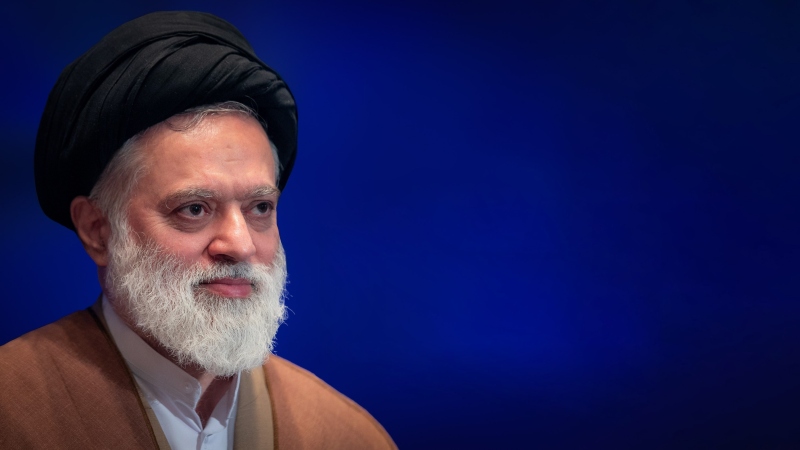
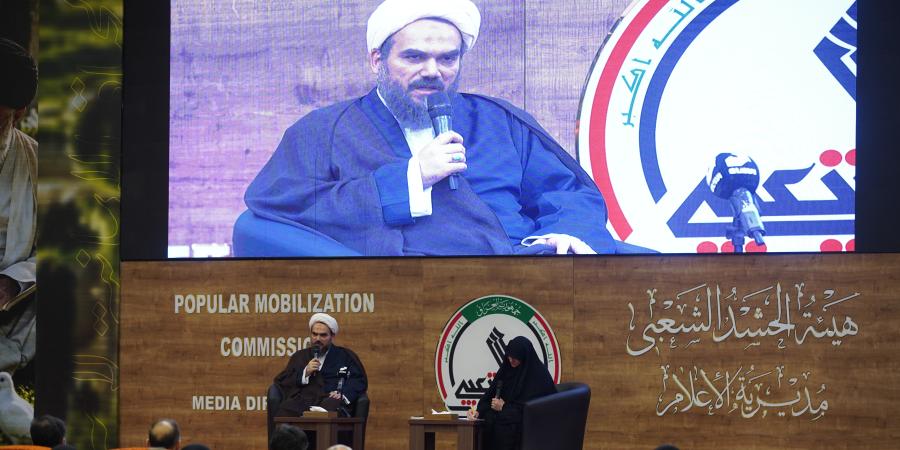
What follows are excerpts from the only interview conducted to date with the eldest son of the martyred Leader of the Islamic Revolution, Ayatollah Haj Sayyid Mostafa Hosseini Khamenei (may his shadow endure). During his father’s lifetime, he refrained from appearing in the media or granting any interviews. However, the commemoration honoring the scholarly and spiritual standing of Ayatollah Sayyid Javad Khamenei (ra) provided an occasion where – after much insistence from the event’s organizers and with the intention of paying tribute to his noble grandfather, the late Ayatollah Sayyid Javad Khamenei – he agreed to this interview.
Conducted in mid-2021, the interview touches upon a range of subjects, including personal memories and some of the unique and unparalleled characteristics of the martyred Leader of the Islamic Revolution. The material is highly insightful and worthy of attention. Therefore, on the eve of the 40th day following the martyrdom of the martyred Leader, we have selected excerpts from this interview that primarily focus on him, presenting them with minor edits and abridgments for the readers of KHAMENEI.IR. The full text of the interview will be published, God willing, by the Islamic Revolution Publications in a special commemorative volume dedicated to Ayatollah Sayyid Javad Khamenei (may God sanctify his soul), titled Sahifeh-ye Parsa’i [The Pages of Piety].
In the Name of God, the Compassionate, the Merciful
During your adolescence, your father was engaged in revolutionary struggles and spent time in various prisons. Do you have any memories of the late Ayatollah Sayyid Javad Khamenei from that period?
One memory goes back to around 1970 or 1971, when my father was imprisoned in the barracks of the 77th Division in Mashhad – approximately where the current governor’s office is located. My grandfather went there to visit my father, and naturally, because it was a military facility, the guards tried to stop him. He reacted sharply, raised his cane, and apparently even raised his voice, and ultimately managed to get inside. He never told us this story himself; it was my grandmother, or someone else who had witnessed it, who recounted it to us.
Another memory I recall from that period – at an age when I was perhaps more sensitive – also relates to the time of his imprisonment in Mashhad. I would often go alone to the late Agha’s[1] [grandfather’s] house. My mother and brothers would stay home, but I preferred not to remain at home; I would go there and sometimes I would stay for lunch before returning home. My main interactions there were with my grandmother. I remember her affection, her solidarity, the way she spoke to me in a way that made me feel understood, and her curses against the Shah who had imprisoned her son. Speaking in a simple, childlike manner to me, she would say things like, “May God crush the Shah under an elephant’s feet!”
In our family, we called our grandfather “Agha” and our grandmother “Khanum.” Among their children, only my father and our eldest uncle had the suffix “Agha” attached to their names from childhood – “Mohammad Agha” and “Ali Agha.” So “Agha” was part of their names in the household and carried an exclusive status. I remember one day the three of us had lunch together in the lower summer room. As Agha was leaving to rest, he turned to my grandmother and said: “Khanum, from now on, let’s call Mostafa ‘Agha Mostafa.’” That was the agreement they made. I believe this gesture came from his affection and concern during that period of imprisonment and exile. He wanted to show me special attention.
Another time, when my father was in prison, my grandfather felt such deep sorrow for his daughter‑in‑law and grandchildren, that he emphasized with my mother, telling her: “On the Day of Judgment, stand before the Prophet and tell him, ‘I endured so much hardship and suffering because of your son [meaning his descendant].’ Because you suffered and faced difficulties on account of the Prophet’s descendant.” This too came from his compassion and distress.
My father was held for eight months in the Joint Committee Prison in Tehran, and no one had any news of him. We were young children, and my mother endured immense hardship. Yet I never saw her complain, sigh, or express any grievance. This was an extraordinary quality of hers in relation to our father. She was a young woman, often left alone, under tremendous pressure, yet she maintained such a remarkable and steadfast demeanor.
The conditions were truly difficult. I remember when Agha returned from the Committee prison in 1975, our relatives had gathered at our home on Fereydoun Alley. After he came in and sat down, the very first thing he said was: “They told me, ‘If you come back again, it’ll be your last time. You won’t be going back!’” Meaning, they would kill him. That was the situation. But he didn’t back down. He kept fighting, which eventually led to him being arrested and exiled all over again.
During another one of Agha’s arrests, we were over at my late grandfather’s house, and something happened that truly showed my grandmother’s courage. The late Agha had guests over that day, and my father and I were there too. There was a room in my grandfather’s house we called the “big room,” where they usually hosted guests. Everyone was in there when suddenly, there was a knock at the yard door—the yard with the pool. My grandmother apparently realized right away that it was SAVAK. That notorious agent, Ghazanfari, was there; I saw him myself. They told me, “Go call your father.” So I went and called my father, and he came out of the room.
Meanwhile, before the front door had even been opened, one of the SAVAK agents had already slipped in through another entrance. I saw someone emerge from the hallway between the two yards. Before my father arrived, my grandmother had already noticed them and, with remarkable courage, she began shouting and cursing at the SAVAK agents. Then my father came out and placed himself between them, confronting them directly. They arrested him and took him away. I ended up going back to our house alone.
Aside from the fact that an agent sneaked into the house and my grandmother wasn’t scared at all, the really remarkable part was how courageously and fearlessly she confronted them. It was a testament to the remarkable spirit of this woman.
On another occasion, there was also a violent confrontation – this time in our own home, related to my father’s exile. The last time my father was arrested and taken into exile, the agents behaved with extreme brutality. They kicked him so hard in the shin that his blood splattered on the ground. Before he was sent into exile, when we visited him in detention, we saw the wound on his leg. But even then, his spirits were high – he actually smiled and joked with us as he showed us the injury, which had left a bloody, crescent-shaped mark.
This is what happened: It was around 3:30 A.M. and we were all asleep at home. Suddenly, someone knocked at the front door – the one directly opposite the entrance to the living room. Apparently, my father had woken up and gone to the door. You have to understand that around that time, word was going around that SAVAK agents were breaking into homes unannounced, killing revolutionaries, and leaving no trace of who did it. Our front door was made of aluminum with square, frosted glass panes. My father was cautious at first, but eventually he opened the door a crack and immediately a pistol was shoved through the gap. He tried to force the door shut and demanded, “Show me your warrant or your ID so I know who you are.” But they smashed the glass, forced the door open, and barged in. I woke up to the noise of their entry.
Once inside, one of them kicked my father hard in the shin, and some of his blood spilled onto the floor. Then they began ransacking the library. Meanwhile, another agent came and stood over us holding a Uzi. My uncle was asleep in another room. All of us were terrified. But right then, by the grace of God, our three-month-old baby brother ended up saving us from a lot of trouble. My mother was incredibly quick-thinking; she used the excuse of needing to make a bottle for the baby to secretly hide a bunch of revolutionary flyers under her chador and move them out of sight. By the time the agents finally left, the call for the morning prayer had already been made. My father first performed his morning prayer, and then they took him away.
Could you tell us a bit about the relationship between the Leader of the Islamic Revolution and his late father? How did you view their relationship during that period?
Describing this relationship in detail is not easy for me. But I would say that my father fulfilled the duty of honoring one’s parents in the best possible way. He genuinely paid attention to his parents and cared for them exactly the way our faith advises. He truly knew how to do it. Anyone who saw the relationship between my father and his father would call it warm and caring. When we were in Mashhad, my father would go to see the late Agha every morning at 8 o’clock. There’s also the well‑known story of his return from Qom to Mashhad during his seminary years at the request of the late Agha, which my father willingly accepted, just so he could single-handedly take care of his father.
Their relationship remained very strong even after my father moved to Tehran. During his presidency, I witnessed several times how, even though he had excruciating pain in one of his hands and it was almost completely paralyzed, he still took care of his father in the same devoted manner. On one occasion, he personally brought his father from his room to the veranda of that building and he laid a blanket over him using just that one functional hand. When the tea server brought tea, my father would sit warmly beside his father. Even though my grandfather was around 90 years old at the time and not perhaps not very warm or sociable, my father was very close to him and would warmly engage with him. I doubt I could perform such acts of care for my own father with that same quality. But in those brief moments, my father would say something that would make the late Agha smile and even joke around. As others have also pointed out, the person closest to my late grandfather was, essentially, my father.
Interestingly enough, in 1981, when my father was the target of an assassination attempt, the late Agha came to Tehran. In those early days, my father’s hand was still in severe pain and the doctors could only partially alleviate it with their efforts. I remember that even though my father’s hand was painful, he took his father for a shower with the help of some friends, such as the late Mr. Shamqadri (ra). At that time, the late Agha was nearly 90 years old, and it would have been difficult for my father to manage alone. But even so, he did not neglect his duty to serve his father. He insisted on attending to him personally, even though he could have asked others to do it.
During his presidency, my father suffered from that hand injury. He was in constant nerve pain and would often wake up many nights in a row. These hardships had become a normal part of his life, yet he never complained. Nerve pain is extremely difficult and agonizing, but despite it, he would attend meetings and carry on with his work. The point is that even with his limited time and this physical suffering, he never neglected his attention to his father. There is a very interesting audio recording from after the morning prayer at the house behind what is now the Assembly of Experts building. On that tape, my father is speaking with his father – very much like those 8 A.M. meetings in Mashhad, with the same kind of conversations and discussions. For instance, they would talk about what a certain scholar had said, or how someone had expressed something in a particular book, or they would discuss the Constitutional Revolution. On one occasion, the late Ayatollah Meshkini[2] (may God sanctify his soul), who was in Tehran at the time, learned that my grandfather was also in the city. He said, “I want to come visit him.”
Ayatollah Meshkini’s father had been in Najaf, and he himself had studied as a seminary student in Mashhad for a while, so he already knew my grandfather. After the evening prayer, he came to our house. The yard was carpeted, and they sat there and began talking. You could really see true Islamic courtesy in how the late Ayatollah Meshkini carried himself; he approached my grandfather with so much humility. He was an exceptionally eloquent and articulate speaker. Among our contemporary scholars, he was truly unparalleled in rhetoric, which is also evident in his sermons. I used to see him often. Because of his close friendship with my father, during the hot summers in Qom, he would come with his family to an empty building in the Presidential Office compound and spend the afternoons walking in the courtyard. My father would come and stand behind him in prayer for the Maghrib and Isha’ prayers.
Part of our memories from my father’s presidency also involve breakfast gatherings at my late grandfather’s house in Mashhad. Whenever my father traveled to Mashhad during his presidency, he would go to a room inside the shrine – on the upper floor at the end of what is now the Imam [Khomeini] Hall. That area was designated for men. If my mother was with us, she and my brothers would go to my grandmother’s house, while I stayed in the shrine with my father. Several times during these trips, my father decided to visit his parents. So early in the morning, a covered pickup truck – sometimes used for transporting food – would arrive. My father would put on a hooded jacket and a hat and climb into the back of the truck. The security team would go ahead, and my grandparents would be waiting for us. We’d have breakfast with them there, and my father would lovingly chat with his parents with that same warm and smiling demeanor of his. After about an hour, we would head back.
I also have another memory about the relationship between my father and our late grandfather, though I am unsure about some of its details. The essence of the story is that once, my father went to my grandfather’s house, in that same lower floor of the house. Out of respect, he bent down and kissed his father’s foot. Then my grandfather told him: “I saw Imam Ali (pbuh) in a dream. I asked him, ‘Will you allow me to kiss your foot?’ He gave me permission, and so I kissed his foot.”
This devotion to his parents continued even after they passed away. For example, we know that shortly after my grandfather’s death – and perhaps also after my grandmother’s, who passed away three years and one month after him – my father would say: “Every day, I pray a two-rak’ah prayer for my father and mother.” For a period, he would also pray a full day’s cycle of prayers for his mother before his noon and afternoon prayers. From a jurisprudential standpoint, he wasn’t the eldest son, so this wasn’t religiously obligatory for him. While we are on the topic, it’s worth mentioning that my father’s religious ruling is that the obligation to make up missed prayers applies to the mother just as it does to the father. On another occasion, he mentioned, “I saw the late Agha in a dream, and he told me to recite Surah Al-Baqarah twice for him.”
In your opinion, which aspects of the Leader’s character were influenced by his late father?
It’s hard to give a definitive answer to that; any answer would just be an educated guess. But I would use the words “nobility” or “magnanimity” – traits that has manifested itself in my father, especially in the political arena. For instance, due to his inner purity, which manifested as asceticism, I never heard my grandfather ever seek to use his ijtihad or his standing for personal benefit. Even when an alley was named after him during his lifetime, he apparently objected to it. He was careful even in much simpler matters. For example, I heard that the local baker, whose name was Mohammad Agha, would try to serve my grandfather out of turn out of respect for him being a scholar and a Sayyid, but my grandfather would refuse.
That actually reminds me of a memory from when I was a teenager that highlights this exact trait. Once, while sitting with him in his upstairs room, I asked, “Agha, are you an Ayatollah?” He gave me a very humble answer, basically implying that these titles and labels simply don’t matter. Similarly, when my uncle wrote something referring to him as “Ayatollah so‑and‑so”, my grandfather would cross out the word “Ayatollah” before his name. It seems that his life was built on avoiding that kind of attention and, as they say, keeping himself out of the spotlight. So, someone like that obviously wouldn’t hold formal teaching circles, gather disciples, or author books; it really might just come down to that preference for withdrawal and those specific personality traits.
My grandfather studied the Kifayah under the late Aghazadeh,[3] and his copy of the Kifayah apparently incorporated Aghazadeh’s annotations. In short, he learned the subtleties of the Kifayah from the son of the original author and was presumably well-versed in it. Someone with such a background could certainly have taught the Kifayah in Mashhad if he wanted to. After all, he was both deeply pious and highly educated; he had both spiritual gravity and scholarly appeal. Yet his reluctance to teach may also be attributed to this very same characteristic. It seems to me that this specific quality is something my father and my late grandfather definitely share.
Another point is that the atmosphere of my father’s home is remarkably serene. As the saying goes, “There may not be luxury, but there is purity.” They lead a simple life, but it is filled with serenity – one pillar of which is my father’s character. He is not a rigid or difficult person. For example, on a rare occasion when lunch might not be ready, and despite his age and busy schedule, if he has to wait an hour – where someone else might frown or complain – he does not frown. Instead, he spends the time talking and joking with his grandchildren, which is something we have always witnessed over time. Of course, another essential pillar of this serene home is our mother. Alongside my father’s qualities, there is also my mother’s exceptional dedication, seriousness, and extraordinary attentiveness. It is these things that bring such purity and serenity to the family environment.
On a broader level, my father also exhibits behaviors rooted in these same qualities – that inner purity and magnanimity. There have been instances where certain individuals treated him extremely badly, yet he never forgets to pray for forgiveness even for them. Once, someone in his presence said harshly, “May God curse so‑and‑so!” They were referring to someone who had done terrible things. This person had, so to speak, not only unsheathed his sword but drawn it from its scabbard, attacked, and struck a blow that landed. In a public gathering at this very Hussainiyah, my father told the people that God Himself had resolved the matter. Just as the late Imam Khomeini directly attributed the liberation of Khorramshahr to God, my father directly attributed the resolution of that specific ordeal to God. He told the man, “I have never cursed such people, nor have I asked God for their death.” To me, this was remarkable. It shows that a person must possess a profound inner spiritual wealth to exercise such forbearance and tolerance. This, too, may have its roots in the character of my late grandfather.
The same is certainly true of his asceticism. My father and his elder brother grew up in an environment where they experienced poverty, but with dignity intact. Their father would not go to others for help or do such things because of poverty. My grandmother, too, endured these circumstances with him. For instance, in my father’s memoirs, he mentions how his mother used to take my late grandfather’s worn-out clerical cloaks and tailor them into clothes for her children, and things of that nature.
Another trait my father and grandfather shared was their devotion to reading. My grandfather was an avid reader. Even during trips to Tehran, my father or his brother would bring books for him. Even now, my father reads extensively. Despite his busy schedule, reading is always a prelude to his sleep. Over the years, he has truly read enough books to fill a massive library – only a very small fraction of which is evident from his marginal notes and prefaces. This quality, too, seems to be shared between that father and son. Eating very little and maintaining a very simple diet is another trait they share.
Regarding the asceticism mentioned earlier: sometimes a person simply lacks taste, refinement, or the means to acquire things, so their asceticism is merely a matter of deprivation. But concerning the late Ayatollah Sayyid Javad Khamenei, we understand that he did possess refined tastes and awareness, and had he wished, he could have provided more for himself. Could you elaborate on this?
Yes, that is an accurate observation. Had my late grandfather chosen to cultivate financial relationships with his friends and associates, his life would certainly have been more comfortable. Especially after his children became employed within the Islamic Republic, they too could have improved their father’s living conditions. Yet the atmosphere of that home and family was one of extreme caution – the kind that the pious exercise in such matters. I recall that once, while we were living in the house behind the former parliament building, where my father resided for a period during his presidency, my grandfather raised a concern, worrying that living there might technically be considered a usurpation [Ghasb] under Islamic law, reasoning, “After all, this isn’t your personal, privately-owned property.” My father had to explain and assure him that he was fully entitled, both legally and religiously, to use the residence.
This same sense of caution is very much present in my father as well. For example, before the Revolution, in my father’s private room, there was a built‑in shelf containing cloth bags filled with religious funds [Wujoohat]. As Imam Khomeini’s representative, he would send these to the Imam. A portion of these funds he was permitted to use for himself. From that permissible portion, he designated a specific amount as his own salary. There were three children in our household, and we had many visitors – so many that my father had told our mother: “Every day, prepare enough food for one extra person, because at any moment someone might knock on the door and come in.” This was completely normal for us at the time. Yet, when that designated money ran out, he would not take any more from the religious funds, even though it was religiously lawful – and indeed, necessary – for him to do so.
Money was so tight that I remember one night he had a meeting with a group of people at a friend’s house. The house was unfinished and under construction; it didn’t even have any rugs yet, so everyone was sitting upright on their heels. At that gathering, one of the gentlemen said to my father, “I owe you a hundred tomans.” I think, my father was so strapped for cash at that moment that he immediately asked the man to pay him the hundred tomans and the man did so right there.
The same pattern continued after the Revolution. During the presidential election campaign of 1985, a friend of his gave him 800,000 tomans to assist with campaign expenses. My father accepted the money, but then gave all of it over to Imam Khomeini (ra) to cover the costs associated with his official residence and government buildings. Even though our daily living and food expenses were covered by ration coupons just like everyone else, he gave that money to the Imam solely for the right to reside in that house. The Imam initially told him it was unnecessary, but my father insisted, and the Imam eventually accepted it. He has always had this mindset of fiercely protecting the public treasury so that absolutely nothing weighs on his conscience. Today, he is essentially a government employee, yet he never takes a salary. His living expenses come from gifts and things of that nature. This has been the case for over 30 years. He has even recently gone back, calculated, and paid out of pocket for his residence and things like that from previous years – things he had previously considered to be his rightful due as part of his position.
Another example of this caution is from recent years, when traveling to the holy shrines in Iraq was common. On several occasions, people brought him blessed pieces of stone left over from the repair of the graves of the Imams (pbut). But he would exercise caution and refuse to accept them, reasoning that perhaps those specific stones were still legally usable in the sacred shrines themselves. Of course, he doesn’t preach this to others, but in his own personal affairs, he strictly observes these kinds of religious precautions without making any show of it whatsoever.
Allow me to turn to another aspect of the life and character of the late Ayatollah Sayyid Javad Khamenei. What was his relationship with Imam Khomeini and the Revolution like? Could you elaborate on that?
After my late grandfather’s passing, Imam Khomeini issued a message. Apparently, my grandfather had some degree of acquaintance with the Imam and my grandmother used to say that the Imam had actually visited our house. My grandmother was very revolutionary – the type you might call a true “Hezbollahi.” Therefore, she did not get along well with her only daughter, who had chosen a different path. My grandfather was the same. In any case, although my late grandfather did not possess the same social disposition as my father, he nonetheless had a record of opposing the [Pahlavi] regime. For instance, on one occasion, together with four other scholars, he wrote a critical letter to the Prime Minister – a letter that ended up having quite an interesting fate.
Now, compare that with my father’s political and social mindset. For example, when he was exiled in Iranshahr, he and the four other exiles there wrote a letter of protest to the Secretary-General of the United Nations, along with other actions that were truly significant and meaningful in the struggle against the regime. On one occasion, the late Martyr Sadoughi[4] visited my father while he was exiled in Iranshahr. During that visit, discussions took place, and apparently, my father presented such a profound and layered argument during the gathering that Martyr Sadoughi was greatly impressed and asked my father to write to him – meaning he wanted to benefit from the intellectual reflections my father had produced in analyzing religious and political matters. This is remarkable considering their age difference: Martyr Sadoughi was an elderly man of about 70 at the time, essentially in the position of a father figure, while my father was a passionate young man. Of course, he was also deeply knowledgeable and solidly grounded in his principles. I emphasize that he was principled: a true mujtahid in the real sense of the word. In any case, my father wrote two explanatory letters to him, which are still available today and demonstrate how principled and well-founded his thinking was.
You could probably say that my father was one of the very first architects of that kind of social thought. When you look at the published works of his discussions from that era, you see the incredibly deep topics a young man in his 30s was raising. Anyone with even a little familiarity with religious matters can tell that these were important and novel ideas. I remember that the vast majority of his audience was made up of young people and university students which was a really unusual demographic for that corner of Mashhad. Today, as a seminary student myself, I realize that back then, his perspective and way of thinking – which aligned greatly with the foundations of the Revolution – was among the earliest of its kind.
Of course, at that time, there were very few activists in the field who possessed initiative. Moreover, some of those who opposed the Shah had more serious problems. For example, some were communists who had issues with the very foundations of religious principles, and were pursuing entirely different objectives.
What was the spiritual conduct of Ayatollah Sayyid Javad Khamenei like? For example, was he influenced by any particular figure?
It may be difficult to speak with certainty in this regard, as one would need to have heard specific statements or observed particular behaviors that are meaningfully indicative. Another point about such matters is that they are usually kept hidden. What becomes known about a person's spirituality and inner conduct is often revealed accidentally, not because they sought to disclose it themselves. In Najaf, it is possible that the late Ayatollah had connections with the late [Ayatollah] Kashmiri or the late [Ayatollah] Qazi. We do not know which great figure his practice most resembled. But having said that, he was certainly a devout man, with a particular dedication to recommended acts of worship, especially the tahajjud prayer.
For instance, I used to see that after his afternoon rest, the late Agha would come and sit among members of his family in a very distinct state of silence. Now, this silence might have been indicative of an inner, spiritual attentiveness. He spoke very little; he was never the type to just sit around chatting or recounting stories. This disposition could very well have been part of a commitment to a spiritual discipline and the specific strictures of someone actively on the path of spiritual growth and perfection. But regarding your specific question, all of these observations are merely circumstantial evidence. In reality, you could say we genuinely know nothing about the specifics of his inner state.
What is your analysis regarding the Leader in this same regard?
Regarding the Leader, the term that comes to my mind is that he is very discreet in these matters. What we have observed is his great interest in this subject – in having people come and having conversations about these topics. On the other side, from his guests who are themselves people of spiritual insight and conduct, there is a loving atmosphere toward the Leader. For example, you might have a ruler somewhere who might summon someone and that person might say, “Well, I have no choice. I have to go to him.” But these individuals [who visit my father], do so with genuine love, affection, and warmth. For example, the late [Ayatollah] Doolabi[5] (may God sanctify his soul) would be brought over by Sayyid Morteza Nabavi, or sometimes would send a message himself saying, “I miss him,” and would come willingly. Or consider the special attention shown to him by others, such as the late Ayatollah Behjat.[6] The late Ayatollah Behjat had a special fondness for the Leader and would sometimes send word through close associates, saying, for instance, “Tell Agha to do this and that.” I believe one of the Leader’s lessons was held on the recommendation of the late Ayatollah Behjat, which is indicative of the care and love that these magnanimous figures had for him.
Another example is the late Ayatollah Mo’allem Damghani,[7] who passed away many years ago. He was a non-cleric, yet a close friend of Imam Khomeini, and he was opposed to philosophy. I recall a gathering where he, my father, my brother, and I were sitting in this very room in Building Number Two. After the meeting, as we walked out together to see him off, he advised me, “To protect the Leader, recite such‑and‑such Surah of the Quran.” On other occasions, I would also notice some of these figures, quietly sharing certain points and recommendations privately with the Leader as they were leaving. This demonstrates the care and inclination these great figures had for him, which of course manifested in different ways. I also consider it quite possible that beyond these outward interactions and observations, there was a deeper, inner spiritual connection. In short, there have been some really wonderful visits here. For my father, with all the work pressure he’s under, these gatherings have truly created heavenly moments. They would sit for perhaps close to two hours at a time, engaging in very good conversations – covering a wide array of fascinating and highly beneficial topics. These extraordinary, spiritual individuals, despite all their differences in method and demeanor, have shown particular care and attention toward the Leader.
In any case, my impression is that the Leader is a very discreet person, and his true inner state is not something he reveals to others. He regularly engages in long tahajjud prayers and his pre‑dawn routine is relatively lengthy. Moreover, he truly possesses outstanding personal qualities. The late Ayatollah Khoshvaqt[8] told me twice that the Leader is remarkably humble, which I found fascinating. Ayatollah Khoshvaqt was rarely one to praise others, yet he voluntarily mentioned this to me on two separate occasions. And we see that, especially in his interactions with people, the Leader sets everything aside, disregards his own position, and behaves with humility. At any rate, these traits are not disconnected from his inner spiritual realities, though I cannot say to what extent or level they reach. It is said that the children of the late Ayatollah Sayyid Jamal Golpayegani[9] (may his soul be sanctified) did not truly know who their father was [spiritually]. Those who were close to him have recounted that when they would discuss certain spiritual matters among themselves, if his children walked in, he would immediately start discussing a minor jurisprudential detail such as ritual purity and impurity. He wouldn’t let them find out what was actually being discussed. Of course, I do not mean to draw an exact comparison here. I’m just pointing out a possible similarity or parallel – it could be something similar.
[1] Throughout this interview, “the late Ayatollah” refers to Grand Ayatollah Haj Sayyid Javad Khamenei (may God sanctify his soul).
[2] Ayatollah Ali Akbar Faiz, known as Ayatollah Meshkini (1921–2007), was a combatant jurist, professor of ethics and advanced levels in the seminary, Chairman of the Assembly of Experts, Chairman of the Constitutional Revision Council, Chairman of the Society of Seminary Teachers of Qom, and Friday prayer leader of Qom.
[3] Ayatollah Mirza Mohammad Aghazadeh Khorasani (d. 1937), known as Aghazadeh, was the second son of Akhund Khorasani, a mujahid jurist and prominent professor of principles of jurisprudence in the seminaries of Najaf and Khorasan. He was arrested and exiled during the Goharshad uprising and was martyred after being injected with a suspicious substance in Shahr-e Ray. His grave is in the shrine of Abd al-Azim al-Hasani, next to the mausoleum of Imamzadeh Hamzah ibn Musa al-Kazim (peace be upon them).
[4] Martyr Ayatollah Mohammad Sadooghi (1908–1982), a combatant jurist, teacher of advanced levels at the Qom seminary, member of the Assembly of Experts for the Constitution, representative of Imam Khomeini and Friday prayer leader of Yazd, and the fourth prayer‑leader martyr of the Islamic Revolution.
[5] Mirza Mohammad Ismail Doolabi (1903–2002), a devoted mystic and ethics teacher residing in Tehran, from whose presence seekers of mysticism and ethics benefited for many years.
[6] Grand Ayatollah Mohammad Taqi Behjat Foumani (1916–2009), a jurist, mystic, prominent spiritual figure, and source of emulation for the Shia world. He was a student of Ayatollah Aqa Zia Iraqi, Mirza Naeini, Sayyid Ali Qazi, Mohammad Hossein Gharavi Isfahani, Sayyid Hossein Badkubei, and Sayyid Mohammad Hojjat Koohkamari.
[7] Mirza Ali Akbar Mo’allem Damghani (1903–1997), a man of spiritual insight and monotheistic gnosis, a longtime companion and fellow student of Imam Khomeini under Sheikh Abd al‑Karim Haeri Yazdi, and later had a spiritual‑mystical relationship with the martyred Leader of the Revolution.
[8] Aziz Khoshvaqt (1926–2012), a jurist, godly scholar, wayfarer to God, and spiritual figure. He was a student of Ayatollah Boroujerdi, Imam Khomeini, and Allameh Tabatabai, and a well‑known ethics teacher in Tehran, spending many years nurturing souls and educating the youth. He was also the father‑in‑law of Ayatollah Sayyid Mostafa Hosseini Khamenei (may his shadow endure).
[9] Ayatollah Agha Sayyid Jamal al‑Din Golpayegani (d. 1957), a jurist, mystic, and prominent spiritual figure. He was a student of Akhund Khorasani, Agha Sayyid Mohammad Kazem Yazdi, Aqa Zia Iraqi, Mirza Naeini, Mohammad Hossein Gharavi Isfahani, Sayyid Morteza Kashmiri, and Sayyid Ahmad Karbalai.
Apr. 9, 2026