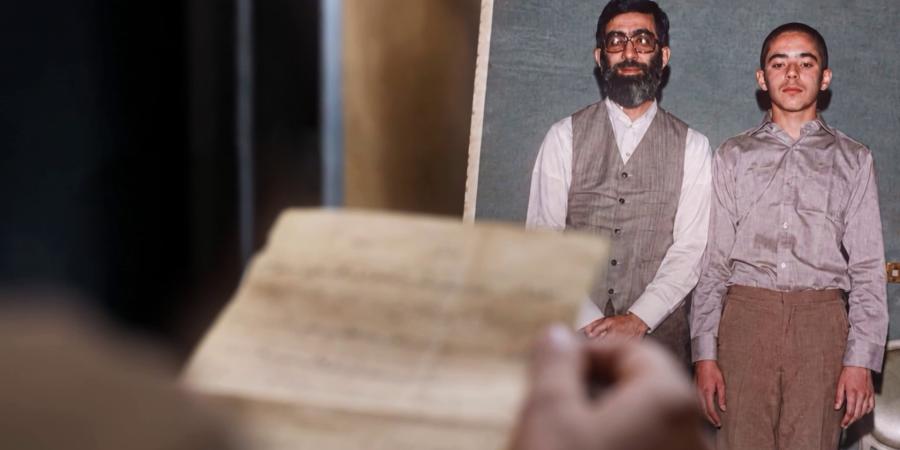
Zeinab Nasrallah, daughter of Martyr Sayyid Hassan Nasrallah, in an interview with KHAMENEI.IR:
We must carry the blood of the martyred Leader by preserving his values and principles
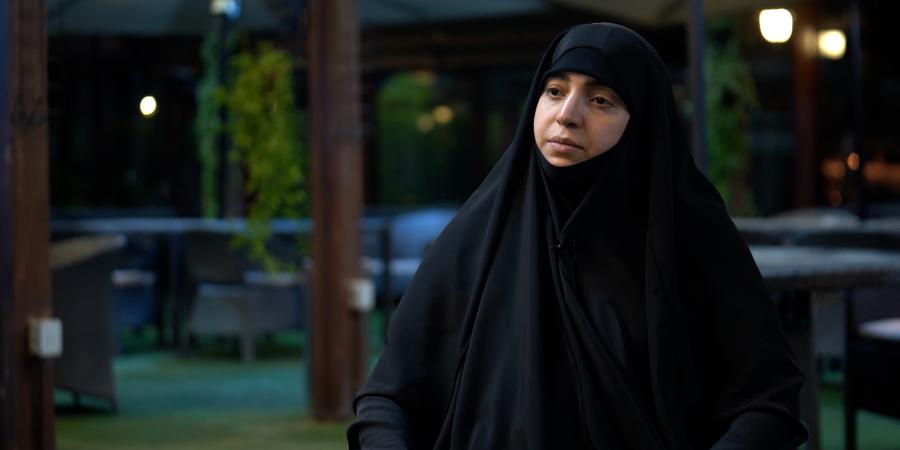
The following is an excerpt from an interview with Ms. Zeinab Nasrallah, daughter of Martyr Sayyid Hassan Nasrallah, in which she states the blood of the martyred Leader must be carried forward by preserving the very values and principles for which he was martyred.
Question: We would like to hear your esteemed view on a critical and fundamental issue of our time. Many — from the general public to elites, from supporters and members of the Resistance Front to others — believe that a rift may emerge between Hezbollah and the Islamic Republic of Iran. Is this perception correct or not? If it is mistaken, why? In your view, will this powerful bond between Hezbollah in Lebanon and the Islamic Republic of Iran continue after the martyrdom of its leaders — that is, Martyr Imam Khamenei and Martyr Sayyid Hassan Nasrallah (may God be pleased with them both)?
Ms. Zeinab Nasrallah: In the Name of God, the Compassionate, the Merciful. First, I offer you my condolences on the arrival of the month of Muharram, and our season of mourning for the martyrdom of the son of Imam Hussain (pbuh) [Martyr Khamenei].
The relationship between the Islamic Republic of Iran and Hezbollah has always been a bond of faith and conviction — never one built on interests. Sayyid Hassan would always say: “In the presence of the Wali al-Faqih, we are honored.” That is precisely what set our relationship with the Islamic Republic apart.
Perhaps many of the analyses and ideas that occur to others stem from the fact that they have never experienced such a relationship. He would say, “They are slaves before others”; therefore, they treat them as slaves and pursue their own interests at the expense of those slaves. But when we speak of our own relationship with the Islamic Revolution, we say we believe it is founded on seeking the pleasure of Almighty God, obedience to God, and the realization of Islamic principles and teachings. It rests on the very conviction that the founder of the Islamic Revolution (may his noble soul be sanctified) established — and that the martyred Leader (may God sanctify his noble soul) developed, expanded, and kept current.
So we, and here I speak from a personal perspective, have never doubted the Islamic Republic’s view of Hezbollah or its support for Hezbollah. Nor have we ever feared that it might set Hezbollah aside from its own vision of the present and the future — that it might say: If it is no longer in my interest to stand with Hezbollah, then it is finished; let Hezbollah be killed, let it fight, and I will have nothing to do with it.
The Islamic Republic has proven, over all these years, that it is the true and foremost supporter — not only of Hezbollah, but of every resistance group on this front. And I believe that in this war, the Islamic Republic dispelled all these doubts and answered these questions clearly.
Of course, these thoughts did at one point create a rift, and some may still speak of it, saying: Iran abandoned you, Iran has forsaken you. They want to drive a wedge between the Resistance and Iran. I believe this war proved that this bond is so powerful that it cannot be severed — and no circumstance or condition can create a rift in it.
And the reason for that is this: today, when Iran negotiates and makes decisions, Lebanon is the first clause of its decisions. Another country might say: what do the others have to do with me? What matters to me is protecting my own country, removing sanctions from it, and saving it from destruction and loss of life.
But Iran does not speak in that language. Iran says: I have a moral obligation — an obligation of faith, a human obligation — and on the Day of Resurrection, I will be questioned about whether I stood with the oppressed and those who were killed.
That is why Iran is striving with its last breath to secure a ceasefire in Lebanon. In the negotiations with Iran, this was never merely words, sentiment, or slogans — if we wish to frame it that way. Iran acted in practice and truly played a highly influential, significant, and important role in this matter. In other words, it used its power to safeguard Lebanon’s interests.
Will this relationship continue?
It will continue, because the Islamic Revolution was founded upon a conviction, and rests upon principles that cannot be abandoned. We believe that the martyrdom of the Leader — and this blood — has shown its effects, and God willing, we will see its effects on an even greater scale in the future; God willing, soon, O Lord.
But we hold this belief — and Sayyid Hassan instilled it in us — that this path and this approach does not halt with the martyrdom of a leader, no matter how great, precious, and exalted his standing may be. For this is the very path of the Ahl al-Bayt (pbuh). The path of the Ahl al-Bayt did not halt with the martyrdom of the Commander of the Faithful [Imam Ali] (pbuh), nor did it halt with the martyrdom of Imam Hussain (pbuh). On the contrary, the school of Imam Hussain (pbuh) is the source and the inspiration of this revolutionary spirit, this sacrifice, and this patience.
We now live in the atmosphere of Muharram, and at the same time — in light of the conditions we are emerging from — we in Lebanon remain in a state of war. Still, every day, among us there are martyrs; there are people who remain missing; homes are being blown up and destroyed; and vast areas remain under occupation.
Yes, we do not claim that we have not grown weary. There is exhaustion; there is psychological and emotional pressure. But this pressure and exhaustion do not mean that we have grown weak in our faith and conviction, that we have surrendered, or that we have said: “We want to lay down our arms so that we can live in peace.”
The companions of Imam Hussain (pbuh) taught us: “I see death as nothing but felicity, and life with the oppressors as nothing but weariness and torment.”
A life of humiliation in our own country? History and the Quran have always taught us that historical accounts are not meant merely to be told — they are meant to be learned from. History and the present both teach us that peace with Israel leads neither to felicity nor to tranquility.
This is the very cancerous tumor that the Imam described as such. We will not rest, and we will not reach true peace, unless this tumor is uprooted — and we believe this with all our being. Sayyid Hassan would say: “This Lebanon, for which we have offered our first martyrs and all these sacrifices — it will not become Israeli.”
Therefore, their hopes must be dashed— whether they are inside Lebanon or outside it: Israel, the US, and all those who beat the drums of peace, for they are not prepared to make sacrifices or pay the price.
After all these years, after the leaders we have offered, after the martyrs, the exhaustion, the sacrifices, and the efforts — after all that our people have lost in property and homes — we will not accept casting all of it aside merely to reach a peace deal.
We are the children of a single conviction. We are the children of the school of Imam Hussain (pbuh), and the children of His Eminence Ayatollah Sayyid Ali Khamenei, who was known for the ideology of Resistance and the ideology of Revolution.
And of course, we believe that this Revolution and this thought will continue, God willing, with His Eminence Ayatollah Sayyid Mojtaba Khamenei (may God protect him).
With His Eminence Ayatollah Sayyid Mojtaba Khamenei (may God protect him) — will the same path, the same movement, the same thought that existed before continue?
The Wali al-Faqih, as we said, is founded upon beliefs and stands upon principles and foundations. So, it is entirely natural that the new Wali al-Faqih should follow the same path of beliefs and principles as the previous Wali al- Faqih — for these are not personal principles or personal opinions. They are derived from the religion of Islam, to which we belong.
We believe that this Wali al-Faqih, given the conditions that Islamic jurisprudence has set, is well qualified to continue this path, and God willing, he will carry it forward with the same strength.
What calmed our hearts more than anything else was that he is of the lineage of Grand Ayatollah Sayyid Ali Khamenei — and that the name Khamenei has remained. Glory be to God: “They plotted, and God plotted, and God is the best of plotters.” (Quran 3:54)
They wanted to martyr Sayyid Khamenei — but a young Khamenei came after them.
God willing, his Revolutionary spirit is there as well — and God willing, it most certainly is. We believe with all our being that this path lies before the eyes of the Imam of the Time [Imam Mahdi] (may God hasten his noble reappearance), and that it is certainly approved and guided by him.
Even if, in certain periods, matters unfold in a way that does not align with our wishes, we believe that the ultimate outcome and the final reckoning are what truly matter. Hardships and trials exist — the lives of the Ahl al-Bayt (pbuh) were filled with calamities, hardship, and difficulties. But do we despair? Do we stop?
The point is that we hold hope, we have faith in the promise of Almighty God, and our duty is to strive for the fulfillment of that divine promise. We ask Almighty God to grant us acceptance and success, and to truly keep us steadfast — for we are at a very difficult stage.
The entire world has mobilized against us; there is pressure everywhere, and the circumstances are painful and sorrowful, even from a spiritual and emotional standpoint.
The martyrdom of Imam Sayyid Ali Khamenei is, for us, an immense and agonizing matter, given the position he held. We learned to love him from Sayyid Hassan. Through that special and profound relationship, we came to know the stature of this great man and came to understand that he was the “Deputy of the Imam.”
So his station was truly exalted — now imagine that we have lost him. It is only natural that this loss should create a kind of void and disruption in our lives, in our intellectual structure, and in our spirit.
But our duty and our obligation is to see how we must — as our martyred Leader would put it — carry this blood upon our shoulders, and how we must fulfill the testament of the martyrs by preserving this blood that has been spilled upon the earth — that is, by preserving the principles, the values, and the conviction for which this blood was shed. God willing, may we be worthy of carrying out this duty.
Question: Do you have a final word or a memory of Haj Qasem Soleimani (ra) – of his kindness, his strength, his courage, or his spirit? And what kind of relationship did you have with him?
Ms. Zeinab Nasrallah: Look — my personal relationship with Haj Qasem was such that I did not see him often. Because of the security conditions surrounding Martyr Khamenei, we did not have the opportunity to sit with him and with Haj Qasem and meet with them.
Of course, our relationship with his family — including Zeinab — was very good and close. But as far as my relationship with Haj Qasem, I only saw him twice.
But I knew of the immense love that Martyr Khamenei held for him, the deep and solid relationship between the two of them, and Haj Qasem’s standing and virtues.
As we said, Iran holds an important virtue and role — it is the supporter and the backbone. Sayyid Hassan always emphasized this, and he loved to remind people of it: the role and virtue of Haj Qasem in the wars, in defense, and in strengthening the Resistance Front as a whole.
So even if I had never seen him, Haj Qasem would still have held a special place in my life — especially since Martyr Khamenei loved him, and that love naturally took shape within us as well.
But I have a memory that I will never forget. The last time I saw him was when we had come to Iran with the families of the martyrs to meet with Martyr Khamenei. The meeting took place, and afterward, we went out quickly and waited for the Leader to send us rings.
In those very moments, Zeinab was there. She said: “Maybe Dad will come.” Meaning, perhaps Haj Qasem would come in a few moments and greet us all. Then he came over to me and said: “Auntie, how are you?” and asked about how my mother and I were doing.
Like I said, he treated us with complete kindness, like a father. You did not feel that this man was a stranger to you — not at all. There was a natural, spontaneous relationship between us; that’s truly how it was.
Then he brought us the rings on behalf of Martyr Khamenei and gave them to us.
Truly, Haj Qasem’s loss is a tremendous loss and bereavement for us — but he, like all the martyrs, was victorious, praise God. May that victory be a source of joy and blessedness for him.
Question: Is there anything we have not asked you about that you have in mind and would like to say?
Ms. Zeinab Nasrallah: I would like to mention this point about the people of Iran.
We spoke about the relationship between the Resistance and the Islamic Revolution. Between a nation — and I do not mean the people of Lebanon, but the people of Hezbollah — and the people of Iran, there is also a special relationship. Between them there is love, friendship, and mutual respect.
But in this war, truly, every time we sat together, we would say: It has been four months that we have seen you on the battlefield; four months that you have been chanting. And really, I am not saying this as a courtesy or flattery. This is what we say as a family and as a community: Masha'Allah, what a people – you do not tire nor do you falter.
You are in a state of war, and you are facing the loss of this great Leader. But as we would say: which is better now? That we weep and beat our chests — or that we come to the battlefield? This, in essence, is the very meaning of Resistance.
That is what makes Iran strong: that we do not grow weak, that we do not surrender, and that we do not let the blood of Martyr Khamenei go to waste.
No — on the contrary, everyone got involved. And the greatness of this nation lies precisely here: that despite differences across spectrums, despite differences in opinions and beliefs — and we all know that there are various tendencies — one of the blessings I spoke of regarding the blood of the martyred Leader is this: that this blood united this nation.
Therefore, we truly believe that the people of Iran have previously provided assistance, even materially, with gold and money, and that they are now prepared, as a nation, to remain in the field and bear the heavy burden of war—even if this continues for a long time; God knows for how long.
But you hold this faith: that we and you are in the sane trench, and God willing, we will all emerge victorious together — God willing.
Sep. 30, 2026