Bab al-Mandab: A front the United States cannot ignore
Ahmad Haji Sadeqian, expert in Yemen studies
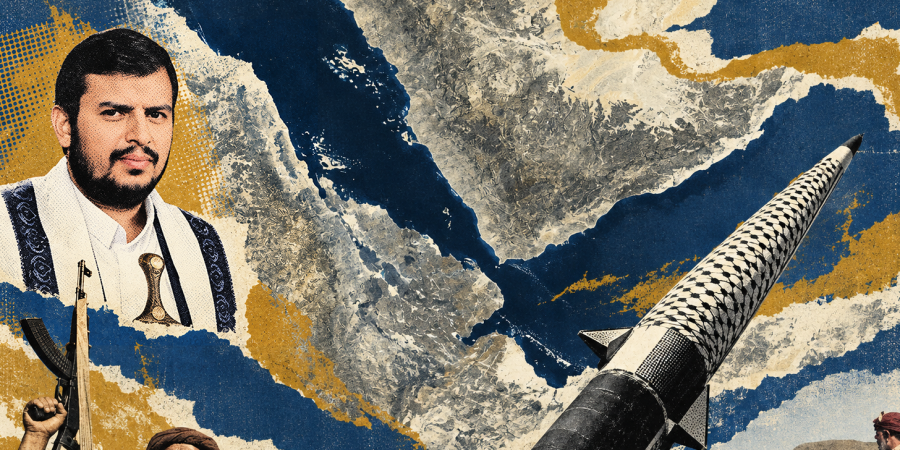
Recent developments along Yemen’s western coast have ushered the Bab al-Mandab and Red Sea equation into a new phase. Ansarallah now has full control over the western coastline, Bab al-Mandab, and the strategic islands of the Red Sea. This has transformed the movement from an influential actor in the war in Yemen into a decisive power in one of the world’s most important waterways. The significance of this development becomes clearer when viewed alongside the experience of the past two years and the United States’ direct efforts to contain Ansarallah’s naval capabilities.
Following the launch of Operation Al-Aqsa Flood, Ansarallah entered the Gaza war equation and extended its activities into the Red Sea. Its declared objective was to pressure the Israeli regime and prevent the passage of vessels linked to it. Ansarallah’s missile and drone attacks on ships and interests linked to Israel quickly turned the security of navigation in the Red Sea into one of the main issues on the US regional agenda. Martyr Imam Khamenei praising the Ansarallah, said in a speech on Jan. 16, 2024: “What the people of Yemen and the Ansarallah government did was truly magnificent. What they did in support of the people of Gaza is truly and justly worthy of praise. They struck a blow to the lifeline of the Zionist regime. The US threatened them, [but] they didn’t fear the US. That’s how they are! When a person fears God, he does not fear anyone else.”
Washington initially sought to contain the situation by forming a naval coalition and increasing its military presence in the Red Sea. However, these efforts failed to eliminate the equation created by Ansarallah. The attacks continued, forcing the United States to move beyond a protective and defensive posture and directly launch military operations against Yemen.
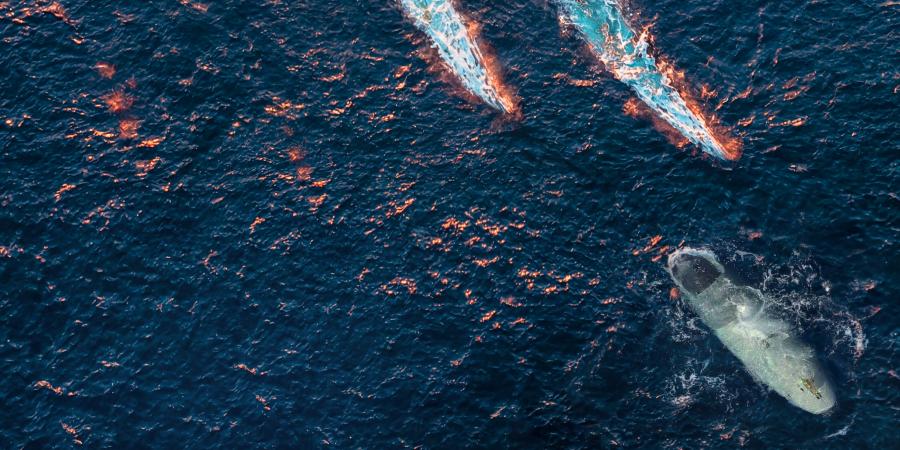
The peak of this effort came in an operation known as Operation Rough Rider, which the United States launched with the aim of weakening Ansarallah’s naval and missile capabilities and restoring the security of shipping In the Red Sea. Washington believed that, relying on its air and naval superiority, it could destroy Ansarallah’s military infrastructure and limit the movement’s ability to threaten ships. But the outcome fell short of the objectives declared by the United States. Ansarallah managed to preserve its operational capabilities, and the United States ultimately halted the operation without achieving the objective it had set for It.
The significance of this experience lies in the fact that, even before the recent developments on Yemen’s western coast, the United States had both the ability and the incentive to intervene directly in the Red Sea—and it did so. Nevertheless, it failed to remove Ansarallah from the region’s maritime equation. Today, that same actor is no longer in a position comparable to the past; rather, it has gained greater geographical control over the western coast and Bab al-Mandab.
This difference makes today’s equation more complicated for Washington. Ansarallah is no longer merely employing its naval capabilities against ships from a distance; it now controls the western coast, Bab al-Mandab, and the islands of the Red Sea. This geographical continuity has provided the movement with greater operational depth and increased its ability to project power over the area surrounding the waterway.
In this context, the collapse of Saudi-led coalition forces on the western coast is particularly significant. In recent years, these forces had been one of Saudi Arabia and the UAE’s main instruments for creating a belt of influence along the Red Sea. The areas around Mokha, the western coast of Taiz, and the routes leading to Bab al-Mandab were all part of this strategy. But with the collapse of these forces’ lines and the consolidation of Ansarallah’s control, that military architecture has effectively disappeared.
Mokha is not merely a coastal city in this context. Its location connecting western Taiz to the Red Sea coast and Bab al-Mandab had given it added strategic importance. Control of this axis has enabled Ansarallah to complete the geographical continuity of its presence along the western coast. As a result, Bab al-Mandab is no longer situated in an environment where forces affiliated with the Saudi-led coalition can use their position to put pressure on Ansarallah’s access to the sea.
This reality has complicated the calculations of the United States and the Israeli regime. For Israel, Bab al-Mandab is an important maritime route connecting it to the Indian Ocean and East Asia. For the United States, it is also part of the maritime network linking the Persian Gulf to the Red Sea, the Suez Canal, and the Mediterranean. Therefore, the consolidation of Ansarallah’s position in this area does not merely represent a shift in the balance of power in the Yemen war; it also affects part of the security architecture the United States seeks to maintain in the region.
However, the United States’ circumstances today are fundamentally different from those it faced when it launched Operation Rough Rider. Washington is now simultaneously engaged in a regional war with Iran and has concentrated a significant portion of its military and political capabilities on that front. Under such circumstances, opening a direct and extensive front against Ansarallah in Yemen would be far more costly than it was in the past.
The significance of this becomes even clearer when Bab al-Mandab is considered alongside the Strait of Hormuz. These two waterways lie on opposite sides of the Arabian Peninsula, and both play a decisive role in global energy security and trade. Under normal circumstances, the United States could devise separate strategies for each of these two points. But amid a regional war with Iran, any military action in the Red Sea would form part of a much broader calculation.
During this war, the primary pressure on US bases and infrastructure in the region has come from Iran. Washington therefore cannot decide to enter into a broad confrontation with Ansarallah without taking Iran’s capabilities on other fronts into account. Direct US involvement in a battle to alter the situation around Bab al-Mandab could expand the scope of the war and increase pressure on US forces and interests across the region.
Under these circumstances, Saudi Arabia also cannot easily fill the vacuum left by the United States. In recent years, Riyadh has supported its forces on Yemen’s western coast and paid significant costs in an effort to alter the balance of power. But the defeat of these forces has shown that restoring the previous situation would require a level of intervention whose cost for Saudi Arabia would be extremely high. In particular, any new large-scale war would increase the risk of attacks on Saudi oil infrastructure, ports, and energy export routes.
Therefore, the main issue facing the United States today is not simply how to attack Ansarallah positions. The question is whether Washington can alter the new situation at an acceptable cost. The experience of Operation Rough Rider has provided a clear answer to the first part of this question: despite using direct military force, the United States failed to eliminate Ansarallah’s naval capabilities. Now that Ansarallah has consolidated not only its military capabilities but also its geographical position along the western coast and around Bab al-Mandab, changing this situation has become even more difficult.
From this perspective, recent developments should be viewed as more than a battlefield victory in the Yemen war. By consolidating its control over the western coast, Bab al-Mandab, and the Red Sea islands, Ansarallah has established a position whose effects extend directly to regional maritime security and the calculations of foreign powers. This position also allows Ansarallah to hold control of a strategically sensitive geography as a lever of power, without the need for extensive military operations.
It is natural that the United States and the Israeli regime will not accept this situation and will seek to change it. But there is a significant gap between refusing to accept a reality and being capable of changing it. The experience of the Red Sea in the period following Operation Al-Aqsa Flood demonstrated that US military superiority alone was insufficient to remove Ansarallah from this equation. Now, too, full control of the western coast and Bab al-Mandab has made any foreign military action more difficult.
For this reason, Bab al-Mandab has become a front that the United States cannot ignore, while at the same time Washington cannot enter into a new confrontation without calculating its costs. This is the change that has taken place in the Red Sea equation: Ansarallah has evolved from a force involved in the war in Yemen into an actor whose geographical position and military capabilities directly affect one of the world’s most important maritime passages. And in seeking to alter this reality, the United States is no longer operating under the same conditions it faced before Operation Rough Rider.
Sep. 19, 2026