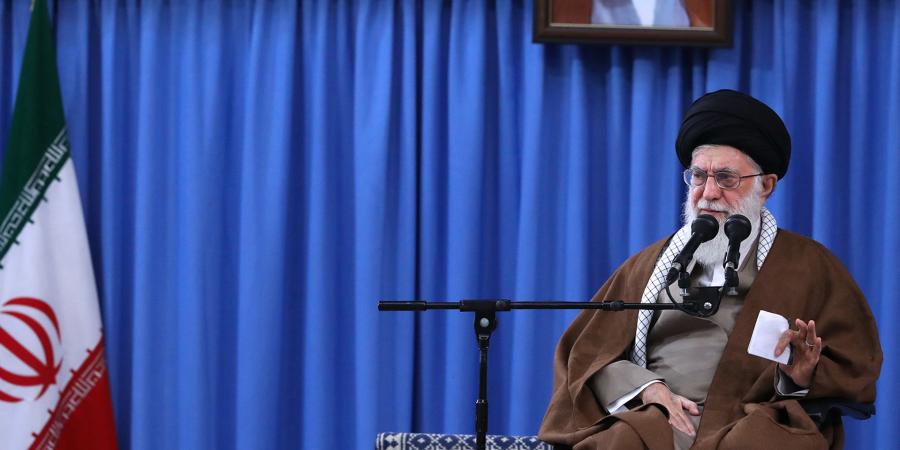
The martyred Imam's distinctive view of Iraq stemmed from a profound love and affection beyond description
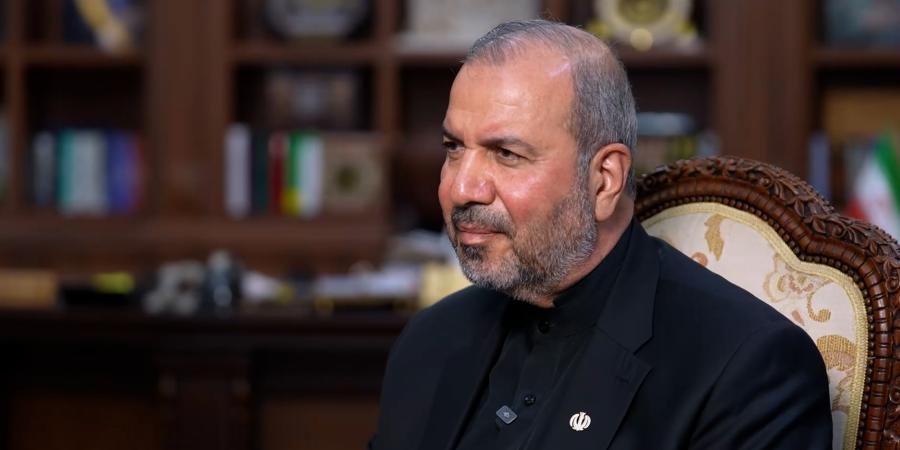
Shortly after the historic funeral of the martyred Leader of the Islamic Revolution in Iraq, KHAMENEI.IR media conducted an Interview with Dr. Mohammad Kazem Ale-Sadegh, ambassador of the Islamic Republic of Iran to Iraq, exploring many different aspects of this historic farewell ceremony, and Mr. Ale-Sadegh’s personal memories with Martyr Khamenei.
Interviewer: In the Name of God, the Compassionate, the Merciful.
I would like to welcome His Excellency Ambassador Dr. Ale-Sadegh to KHAMENEI.IR and thank you for granting us your time, especially during these days when you have been heavily occupied following the massive and historic funeral of the martyred Leader of the Revolution in Iraq. Thanks for joining us.
As you know, the martyred Imam had a special interest in Arab culture and the country of Iraq, both in his speeches and in his life’s conduct. As recorded in his memoirs, both oral and written, there are numerous references to his time in Iraq prior to the Islamic Revolution, and he always spoke of Iraq with profound interest. Following the victory of the Revolution, when Saddam’s regime attacked the Islamic Republic, Martyr Khamenei’s perspective toward the Iraqi people remained steadfast, consistently characterizing them in terms of brotherhood and friendship. In fact, there are Arabic speeches by the martyred Imam containing highly brotherly addresses to all Iraqi sects, groups, and religions. Our question here is: How did you perceive this view of the martyred Imam toward Iraq, its reinterpretation, and its practical application during your tenure as Ambassador, and what specific recommendations did he provide to you?
Ale-Sadegh: In the Name of God, the Compassionate, the Merciful. I offer my condolences to you and our respected audience on the days of mourning in Muharram, as well as on the martyrdom of the Leader of the Ummah, Imam Khamenei. His martyrdom marked a turning point in history and brought about a major transformation in the world. In Iraq itself, from the northern city of Mosul to the southern regions, the people mourned, held gatherings and assemblies, and many even set aside their usual customs and traditions out of reverence.
Due to his profound insight into nations and his deep understanding of cultures, Imam Khamenei paid special attention to Iraq and the Iraqi people. His writings and speeches are a testament to this; he always desired a strong, independent, free, and advanced Iraq, particularly because it is the land of the Ahl al-Bayt [the Prophet’s Household] and the center of Shia Islam. His constant advice to Iraqi officials was to preserve Iraq’s independence and safeguard the liberty of the noble Iraqi nation. Furthermore, he held a highly distinctive and respectful view toward the Marja'iyya [religious authority] and the Islamic seminaries. He had an indescribable level of respect for Grand Ayatollah Sistani and consistently recommended that his guidance be emphasized and acted upon.
Imam Khamenei’s perspective on poetry, culture, and literature, along with his profound knowledge of poetics, has astonished everyone. We consistently observed this in his meetings with poets and intellectuals. He even possessed a deep and precise understanding of non-classical poetry, or what is known as Sha'bi poetry.
During a visit by Mr. Mohammad Mahdi al-Jawahiri, one of Iraq’s eminent poets, with the martyred Leader, his companions recounted that Imam Khamenei had highly praised al-Jawahiri’s Ayniyyah ode. In fact, the Leader had memorized the entire poem by heart. He even retrieved al-Jawahiri’s Diwan [collection of poetry] from the library, remarking, "I have annotated your poems and made notes on certain passages."
Upon witnessing this, Mr. al-Jawahiri turned to our martyred Leader and said, "I doubt any Arab leader has memorized even two lines of my poetry, yet you have memorized an entire ode and read my complete Diwan." He was so moved that he wanted to lean down and kiss the Leader’s hand. This incident perfectly illustrates the profound depth of the Martyr Khamenei’s literary and cultural understanding of both al-Jawahiri and the culture of the Iraqi nation.
During the meetings with the Mawkibs [religious procession stations], truly magnificent scenes were created. The Leader’s gracious and affectionate words to them continue to yield lasting effects and blessings, and they constantly bring this up with us. Whenever we visit the Mawkibs during Arbaeen, this memory remains vivid in their minds. It was their heartfelt wish that such encounters would be repeated during the lifetime of Imam Khamenei, the martyred Leader of the Ummah.
I now have a humble request to our dear Leader, the light of our eyes, His Eminence Ayatollah Sayyid Mojtaba Khamenei: that under suitable conditions, God willing, we may recreate this scene with the Iraqi tribes—that they may be granted the honor of meeting him in person as they truly deserve it. We witnessed the profound emotional fervor they displayed upon his martyrdom, as well as their passionate and zealous presence during the funeral procession. It is only fitting that, God willing, this opportunity materializes, allowing the Iraqi tribes to pay their respects to him in person at a suitable time.
Question: Very well, Mr. Ambassador. You spoke about some of the recommendations of our martyred Imam and several recurring keywords in his speeches, whether in meetings with Iraqi officials or in public gatherings – such as an independent Iraq and an advanced Iraq. I would also like to highlight the special attention he paid to the Iraqi youth. He even wrote them a letter in Arabic, in his own handwriting, wherein, alongside expressing his affection by stating, "Inni uhibbukum" ("Indeed, I love you"), he also wished a bright future for the youth of Iraq. This stands in stark contrast to the narratives we constantly see in media outlets opposed to the Islamic Republic and the Resistance Front, which invariably claim the exact opposite regarding Iran and the Resistance Front.
Now the question I would like to ask you is this: During the meetings you had with the martyred Leader, what were his recommendations to you, and what were the most frequent of these in the political sphere, specifically in your role as the Ambassador of the Islamic Republic?
Ale-Sadegh:
His overarching vision for Iraq is truly monumental. He regarded Iraq with an indescribable love and affection. In a notable meeting with Iraqi scholars, he famously stated: "We are one with you; our flesh is your flesh, and our blood is your blood." Of course, while these words originated from our martyred Imam, they were also spoken by the martyred President Raisi and left a profound impact in Iraq.
Iraq is a youthful nation: 50 percent of its population is under the age of 25, and 70 percent is under 35. According to official statistics, 60 percent of Iraqis—both men and women— are of working age. This represents a tremendous national potential. Martyr Khamenei’s view was always that young people should find their rightful place in Iraqi society, actively participate, and shape Iraq's future. The Iraqi people recognized this, which is why they look upon Martyr Khamenei with such love and admiration.
The scenes witnessed during the funeral procession were truly remarkable. We saw teenagers following Martyr Khamenei’s pure body, taking off their shirts and tossing it over with pure devotion to be blessed before catching it back with overwhelming joy. I saw young men who, the night before, slept in parks and along boulevards clutching the Imam's photograph, waiting for the moment they could set eyes on Martyr Khamenei’s coffin. These were deeply moving, affectionate scenes that we observed throughout Iraqi society.
Therefore, his perspective on Iraq was truly exceptional. Unfortunately, due to underlying infrastructure challenges, Iraq faces electricity shortages. Regarding our power export contracts, whenever issues arose that led to a reduction in electricity supply—whether due to financial issues or other matters, which I need not detail here—Martyr Khamenei would consistently emphasize that the needs of Iraqi society must be attended to and their concerns addressed. He regarded Iraq's security as our own security; he considered the joy of the Iraqi people as his own joy, and their grief as his own grief. These messages resonated with the Iraqi people, and they deeply appreciate the profound affection and love he held for them.
Sometimes I ask myself what the secret behind this love and devotion is, and people say: his stances and his unwavering support. Well, during the war against ISIS, Grand Ayatollah Sistani's fatwa had a massive impact in mobilizing the Iraqi nation to defend Iraq. They do not forget Martyr Khamenei’s directives to supply weapons to Iraq—without prior formal contracts, without waiting... Ensuring the weapons reached their hands first so they could defend themselves, leaving the administrative procedures, contracts, and accounting for later. Of course, it was not unaccounted for, contrary to what some might assume, but there were no preconditions attached, unlike the Americans or certain Arab nations to whom Iraq extended a hand of need only to be turned away.
The Islamic Republic opened its armories, and Martyr Soleimani created epic triumphs here in mobilizing the Iraqi people, training, organizing, and managing the battlefield. This victory was forged through the decree of the Marja'iyya, the mobilization of the Hashd al-Sha'abi [Popular Mobilization Forces], and the backing of the Islamic Republic; thus, the chapter of ISIS was closed through the cooperation of these two nations and countries. May these ties continually expand, and God willing, may we always keep the guidance of our martyred Imam in mind, remaining diligent and steadfast in deepening and developing these relations.
Question: In your remarks, you referred to the ceremonies held across Iraq following the martyrdom of the martyred Imam, highlighting their vast scale and character. If possible, I would like you to elaborate further on these events—whether you participated in them, were invited, or attended on your own initiative. Additionally, could you share more about the funeral procession and how the idea of holding Martyr Khamenei’s funeral procession in Iraq originally came about and took shape?
Ale-Sadegh: As I mentioned, throughout Iraq—from Mosul to Basra, from the northernmost tip of Iraq to the southernmost point—we witnessed the visible signs of mourning, grief, and sorrow. When Martyr Khamenei was martyred during the month of Ramadan, it was followed by Eid al-Fitr, Eid al-Adha, and Eid al-Ghadir, which are highly sacred holidays for Iraqis. During Eid al-Fitr, a striking scene unfolded in Bain al-Haramain [the place between the two holy shrines of Imam Hussain (pbuh) and Abul-Fadhl al-Abbas (pbuh)] during the Eid prayers, which was broadcast on television—a direct comparison between the previous year's Eid prayer and this year's. In a completely spontaneous, highly organized manner and without any directive, the people themselves expressed their grief. If you place the two photos side by side, one is entirely white and the other is completely black. During last year's Eid, people wore clean, new, white shirts; this year, everyone was dressed entirely in black.
The families and friends we see tell us, "Our family is in mourning." There were tears, lamentations, and visible signs of grief. As you walk through various neighborhoods and alleyways, you see banners put up announcing, for example, "Women's mourning gathering for the martyrdom of Martyr Khamenei." The tribes canceled their traditional holiday visitation gatherings. The custodians of the holy shrines of Imam Ali, Imam Hussain, and Hazrat Abbas (pbut) used to decorate the sacred shrines with flowers during annual Eid celebrations and the birth anniversaries of the Imams. After the martyrdom of Martyr Khamenei, however, this did not happen. On the windows of their official reception offices, they wrote: "We accept no congratulations on the occasion of Eid." This year, they officially declared the cancellation of all Eid visits.
A senior judicial official in Iraq announced that during the forty days following the martyrdom of Martyr Khamenei, they did not register a single marriage. In the Shia-majority provinces, law dictates that marriages must be registered in courts. This was no small gesture; it signified that people suspended all such celebrations and postponed their weddings to a later date.
Among the offerings, an eleven-year-old child donated his bicycle, and a four- or five-year-old girl took off her earrings and presented them as a gift. Here at the embassy, we were gathering these gifts. In less than a month—whether this figure should be cited or not—nearly five million dollars, or the equivalent value of five million dollars, was collected, alongside more than three kilograms of gold donated by the public. Since Grand Ayatollah al-Sistani had issued a fatwa calling for assistance to both Iran and Lebanon, the people’s arrival at the embassy signified that their contributions were intended for the Islamic Republic. However, we advised them not to forget the Lebanese people, and our staff at the consular counter would tell people, "If possible, given that the people of Lebanon and supporters of Hezbollah are also enduring extremely harsh conditions and displacement during the winter cold, please allocate a portion of your support there."
They would reply, "The Islamic Republic has its own special place, but we will allocate some of our contribution to Lebanon as well." In other words, they stepped forward and offered their donations to both countries with a truly profound sense of solidarity.
Let’s go back to story of the bicycle. After the donation was made, our Cultural Attaché, as a reciprocal gesture, gifted the child a nice new bicycle in return. However, the most remarkable part of this story occurred when a Member of the Iraqi Parliament called me and said, "In recognition of this young man’s resolve and selflessness, I have purchased a car to gift him, and I would be honored if you could attend the ceremony."
"I must attend a gathering to which the tribal leaders in one of the provinces have invited me," I told him. "I apologize, but I won’t be able to attend."
What happened afterwards was even more extraordinary: that same family, the same child with the bicycle, called me and said, "They gave me a car in return for the bicycle I donated, and I want to come back to the embassy to gift this car to the Islamic Republic."
Where else can you find the depth of devotion, connection, and love that exists between these two nations? Something like this can only take place around the central axis of Imam Hussain and the Ahl al-Bayt (pbut). This reality was perfectly encapsulated in a highly resonant slogan raised during one of the Arbaeen commemorations: "Hubb al-Hussain yajma'una" [The love of Hussein unites us]. This is precisely what is unfolding here, and we are privileged to witness such extraordinary scenes firsthand.
In any case, numerous tribes across various provinces invited me, and through an armed presence, they declared their readiness to support the Islamic Republic, stating: "We have come to defend you." They emphasized that the Islamic Republic has made them proud and bestowed honor upon them through this conflict. They deeply recognize that the defense mounted in support of Shia Islam, the Islamic Ummah, and the Axis of Resistance is being steadfastly upheld by the Islamic Republic.
They said, “We are fully prepared to go and fight." To which we would reply, "Brothers, this is an aerial war; had it been a ground war, you would undoubtedly have stepped forward ahead of us to participate in the war."
So, many remarkable events took place. During a visit to Wasit Province, I was addressing a gathering of tribal leaders. After the ceremony concluded, one of the esteemed tribal sheikhs of the province presented me with a Brno rifle, complete with its shoulder strap and gear. He said, "My great-grandfather gifted this to my grandfather, my grandfather to my father, and my father to me. However, out of the love, admiration, and respect that I have for the Islamic Republic, Martyr Khamenei, and the monumental actions of the Islamic Republic, I want to gift this rifle to you."
Today, I display it with pride in my office. A scene like this illustrates the profound, deep-rooted bond between our two nations.
Or take the region of Nasiriyah for example; the province of Nasiriyah has its own unique conditions. I was invited there on two occasions. That spontaneous, symbolic funeral procession in the first province actually began in Nasiriyah. Later, we witnessed numerous ceremonies held for commemoration, mourning, and declaring solidarity.
On another occasion, I visited Babil Province. A young Iraqi poet truly moved the audience with an ode; his expressions were highly elevated and his themes exceptionally profound. If you will allow me, I would like to recite one of his couplets in Arabic and then provide the translation. It began like this:
"Qabl la yindafan jeebuh alayna, nureed Al-Khamenei nuwafi deenah."
Meaning: "Before Martyr Khamenei is laid to rest, bring him to us; we wish to repay our debt to him." He continued with exceptionally high literary expressions, saying that they would beat their chests in mourning for him until their hands broke, and that in Najaf, beside our master, the Commander of the Faithful [Imam Ali (pbuh)], they would weep so profusely that they would bathe his body in their tears. Countless examples of that kind were witnessed there.
At the embassy, we were visited by various groups of people requesting that the funeral procession for the body take place in Iraq. Likewise, during our visits among the people in the provinces, petitions were drafted, and letters were signed by tribal sheikhs and elders and sent to us. A number of MPs came to this very office and, representing 107 parliamentarians, handed us a letter addressed to Iran’s Parliament Speaker, requesting that the funeral procession for Martyr Khamenei’s pure body be held in Iraq. They presented this signed with red ink—symbolizing blood and a bond of blood, signifying that they were prepared, for instance, to offer their own blood.
So, discussions were held with officials in the Islamic Republic, and we presented this request. Similar appeals were made across various other sectors as well. Institutions within the Islamic Republic, including the Office of the Supreme Leader’s Representative in Najaf, also submitted comparable requests, and a coordinated movement began to take shape. This request made by the noble and honorable Iraqi nation was conveyed to the Islamic Republic, and approval was granted. Discussions were also held with Iraq’s Prime Minister, explaining that we were receiving this request from all sectors of society—from the tribes, religious scholars, the youth, and various segments and ethnicities of Iraqi society—asking how we should proceed regarding this matter.
I spoke with two prime ministers. In the first instance, I spoke with Mr. Sudani. He said: "It would be our pleasure. My family, and I, and even my mother, will be present in the front row of the funeral procession." The reason he specifically mentioned his mother was to evoke the memory of when he brought his mother in a wheelchair to cast her vote in the elections—an image well-remembered by the Iraqi public. And indeed, they did participate in the funeral procession—specifically during the official ceremony at Najaf Airport.
I also spoke with Iraq’s current Prime Minister, Mr. Ali Zaidi. He said: "It would be an absolute honor for us to host this ceremony; our martyred Ayatollah, Imam Khamenei, does not belong solely to Iran, but to all Shias." He gave his approval and established a high-level committee, headed by his Chief of Staff alongside other members. As you saw, they performed a monumental task in terms of both logistics and security, resulting in a magnificent, grand, and completely secure ceremony.
In terms of services, I described it as an "early Arbaeen"—marked by the presence of Mawkibs and the serving of refreshments to the people in the holy cities of Najaf and Karbala, as well as along the Arbaeen route. As the vehicle carrying the body traveled along the road from Najaf to Karbala, we had requested officials to ensure periodic stops along the way so that the people could mourn and perform their specific rituals, such as the traditional Yezleh and their own special chants. Consequently, the vehicle was unable to easily navigate the route that had initially been planned for a one to one-and-a-half-hour journey. This delay led to the ceremonies in Najaf and Karbala continuing until close to the dawn Adhan [call to prayer], and as a result, Martyr Khamenei’s body was transported to the holy city of Mashhad with a delay.
Question: Did you anticipate that we would see such a massive, historic, multi-million crowd at the funeral procession?
Ale-Sadegh: We were well aware of the people’s love and devotion. Martyr Khamenei loved these people and spoke to them in their own language. That resonated deeply with them—being addressed in their own dialect and language. Whenever I ask them, "Why do you love the Imam so much and hold such extraordinary affection for him?", they point to his face, his smile, and his speeches, which possessed a unique charm that resonated deeply within their hearts. Iraqi intellectuals and elites often note that Martyr Khamenei never overlooked historical developments or world events; he paid close attention to Palestine, Lebanon, and Yemen—consistently defending the underprivileged, the oppressed, and the free-spirited. We witnessed this firsthand in his fatwa regarding Iraq, his defense of Iraq during the war against ISIS, and his praise and encouragement for the resistance against occupation. All of these elements are deeply ingrained in the minds of the Iraqi people, and it is precisely this that gave rise to the magnificent scenes we witnessed. To be completely honest, while we expected a large turnout—in the millions—what we actually witnessed far exceeded all expectations.
Question: How do you assess the impact of this event, particularly on the relationship between the people of Iran and Iraq? How do you see this relationship taking shape in the future, following this historic occurrence?
Ale-Sadegh: We regularly witness these scenes of a profound bond between the two nations during Arbaeen. Annually, approximately 11.5 million pilgrims and travellers move between Iran and Iraq, with the larger share originating from the Islamic Republic. Nearly 3.5 million people travel from Iraq to Iran each year for various purposes, including pilgrimage, tourism, medical treatment, as well as trade and commerce. However, the larger portion—nearly four million of which occurs during Arbaeen—has created social ties and fostered deep interpersonal interactions between our citizens. I believe that this historic event will serve as a powerful catalyst, further deepening these bilateral relations and elevating the mutual affection between our nations to an entirely new level.
You saw the presence of Iraqi Mawkibs in the public squares and just how impactful they were. Naturally, the enemies exert immense effort to sow division between these two great, noble, and honorable nations. However, to the dismay of the enemies, God willing, these expressions of affection, these circles of unity, and these enduring bonds will prepare both countries for the blessed reappearance of Imam Mahdi. May this region also serve as a capital for the Imam of the Time, and may the continuity and the deep heartfelt, ideological, and cultural bond between our two nations grow even stronger.
Question: Mr. Ambassador, as my final question, I would like to reflect on your four years of experience serving as the Ambassador to Iraq. Naturally, during this tenure, you have held numerous meetings and sessions with various Iraqi figures, as well as with officials in Iran regarding your diplomatic duties, including meetings with the Leader of the Islamic Revolution. In these engagements, we are particularly interested in hearing what the Iraqi figures had to say about the martyred Imam, specifically regarding his perspective on Iraq. If there are any particular anecdotes or memories from Iraqi figures concerning him or his view toward the country, we would be grateful to hear them. Likewise, regarding the meetings you had with the martyred Imam himself, could you please share any special or memorable recollections with us?
Ale-Sadegh: Well, yes, I do have some memories. Certainly, if time permits on my end and on yours, I will share them during your program.
During the visit of the then-President of Iraq to Tehran, he had a meeting with Martyr Khamenei. Mr. Qasim al-Araji, the National Security Advisor, was present at the meeting. After the session concluded, he asked Martyr Khamenei if it might be possible to receive a ring or a keffiyeh from him as a gift.
"I will give you both," Martyr Khamenei warmly replied, as he took the ring off his hand and gifted it to him, along with the keffiyeh that had been draped over his shoulders.
Now, another official who was present—the President's security advisor—said, "Martyr Khamenei, I would like a ring as well." At that point, he didn’t have any more rings on his fingers.
"Bring me a ring," he instructed his aides. "I we give you a ring." Seeing how the situation was unfolding, with everyone asking for gifts, I decided to take advantage of the opportunity and I too requested a ring. "I’ll give you one as well," he replied graciously.
As we were leaving, a handful of rings were brought forward. He selected one, recited a prayer over it, and gave it to the Iraqi guest. I then had the privilege of staying behind for a few minutes alongside some of the office officials to continue discussions on certain matters. When it was finally time for me to leave, I felt it was no longer appropriate to ask for a ring myself. Instead, I simply said, "Sir, please keep me in your prayers." Martyr Khamenei immediately realized: "Oh! Bring the rings." His aides brought out a handful of rings again. I clearly remember picking up three rings and setting them back down; the fourth featured a beautiful lilac-colored agate stone that I felt drawn to. He gifted it to me; it is a precious gift that I cherish deeply and treasure with immense pride.
One of the most pleasant memories I have is related to Martyr Khamenei’s final provincial trips—I believe he did not make any provincial visits after those. They were to Kurdistan and Kermanshah provinces, undertaken back-to-back in the final two years of his travels.
In Kurdistan Province, Martyr Soleimani instructed me and General Masjedi: "You must travel to the Kurdistan Region and speak with the regional authorities, namely Mr. Barzani and the late Mr. Talabani, who was President at the time. Emphasize to them the absolute necessity of maintaining strict security, ensuring that not a single bullet is fired from the Region by counter-revolutionary elements stationed there toward Kurdistan Province, the city of Sanandaj, or any other areas. Such a thing must not happen."
So, General Masjedi and I went and delivered this message to the regional authorities of the time in a suitable manner. Martyr General Soleimani had instructed us: "You are not to return for as long as Martyr Khamenei remains in Kurdistan Province. You may only come back after his flight has taken off and he has landed safely in Tehran." And that is precisely what we did.
After the trip, we met with General Ostovar, who was serving as the commander of the Hamzeh Headquarters and the chief of security during the visit. We asked him about his memories of the trip. He recounted a particular scene, sharing that early one morning, Martyr Khamenei said, "Let's go for some exercise." During his morning mountain hike, various people were present, including a young man and woman. Now, the young woman was not fully observing the Islamic dress hijab. Upon seeing Martyr Khamenei, they felt embarrassed and stepped aside to stand in a corner. Our Martyred Imam warmly greeted them with his characteristic fatherly grace and kindness. The moment he offered his greeting, the young woman was overcome with emotion and burst into tears.
When we later asked her, "Why did you cry?" she replied, " An extraordinary feeling washed over me—a feeling of fatherly love. If it weren't for the rules of mahramiyat [religious boundaries regarding physical contact], I would have jumped forward and hugged him." She said this with a special kind of love and admiration. You can see the results of his loving, fatherly approach to our nation's daughters in our public squares today. Even those who once struggled to follow his guidance are now warmly expressing their regret, saying, “We were wrong. We didn’t realize who he was, and now we’ve lost him.”
The year after that, he visited Kermanshah Province. Once again, Martyr Soleimani instructed General Masjedi and I to go to Kermanshah and remain there for the entire duration of the trip. The rationale behind this assignment was that I had the honor of serving as the commander of the Ramadan Headquarters at the time, and the mission of the Ramadan Headquarters pertains directly to Iraq. That was why I was selected for this trip. General Masjedi was in charge of the Force Headquarters and we were assigned missions accordingly.
However, he instructed us: "There is no need to cross the border this time. Inspect and manage the border zone from this side, and coordinate with local provincial authorities to ensure security is fully maintained." And that is exactly what happened.
After the visit concluded, Martyr Khamenei sent a message inviting everyone involved in the mission to join him for prayers and lunch. We had a secondary command post headed by Mr. Naderi—may God rest his soul, he passed away during the COVID-19 pandemic. "You are the local commander on the ground for now," I told him. We are going to join the prayer, and we'll sit in the front row. Could you please see if you can secure Martyr Khamenei’s keffiyeh for us?"
Well, we went in early and took our seats in the front row. But then we saw generals, high-ranking commanders, and senior officers arriving. Out of respect, we moved back from the first row to the second row. More people kept arriving, and soon we were in the third row, which limited our proximity to Martyr Khamenei.
I turned to Mr. Naderi and said, "I don’t think we’ll be able to get the keffiyeh now. Do you think you’ll be able to get the Leader’s prayer cloth for us instead You know, the white cloth on which the mohr [prayer stone] is placed.
"Yes, I can do that," he replied.
"Alright, let's see what you can do," I said.
When the prayer concluded, a large crowd gathered, forming multiple circles around our Martyred Imam. I thought to myself, "Well, the prayer cloth is probably gone by now as well; there's no way we can get to it." We then proceeded to the next part of the program, which was lunch and our Martyred Imam sharing his memories with us.
Shortly after, I saw Mr. Naderi come over with a big smile. He sat down next to me, and exclaimed, "I got it! I managed to get the prayer cloth."
"Well done! Excellent work! Thank you so much!" I cried.
Once lunch was over, we headed to the command post he was in charge of. I felt sorry for him; after all, he had made the effort and pulled it off.
"I'm not an unfair person," I told him. "Bring me a pair of scissors so we can cut this prayer cloth in half. You can have one half and I’ll have the other half. That way we can both have a blessed keepsake."
After I cut it in two, it suddenly occurred to me to ask him how he had obtained it.
"By the way, Mr. Naderi, how did you manage to obtain this? How did you get it?" I asked.
"I saw the aide who folded the prayer cloth put it down in a corner. Once the area cleared out, I went over and picked it up."
"You stole this prayer cloth?!" I exclaimed. "You've gotten us into trouble now. What are we going to do?"
By then, the official delegation had already departed. We reached out to every official we believed had access to the Leader’s office—the Office of the Leader’s Representative, General Soleimani himself, and others—asking them to obtain a permit from the Leader regarding this matter. Given that the prayer cloth had already been cut in half, it could no longer be returned in its original state. Nothing came of it until the Minister of Interior at the time, who was traveling to inspect Iraq, requested to perform prayers at the office. Martyr Soleimani made the arrangements, and I had the honor of attending that prayer session with Martyr Khamenei.
While there, I approached one of the respected members of his office and said, "I have a religious question for Imam Khamenei. Please let me ask it; don't tell me I can’t speak with him."
"Religious questions should be raised there," he pointed.
"No, I need to address Imam Khamenei directly; I must ask him myself. It will take too long otherwise—I really have to do this."
To cut a long story short, Martyr Khamenei warmly greeted the delegation. When it was my turn, I approached him, kissed his hand, and held it. I quickly recounted the story of how his prayer cloth had been "stolen" and explained the situation, saying, "This prayer cloth is now in our possession, but we cannot use it without your permission." He looked at me warmly from beneath his glasses and said, "Well, you’ve already taken it…"
"Yes I have," I replied, "but I need your religious clearance to keep it."
"That’s fine," he said. "You may use it."
So, those were some of the moments and opportunities I was honored with while serving Martyr Khamenei. May Almighty God grant our wonderful new Leader, Ayatollah Sayyid Mojtaba Khamenei, a long and honorable life, and may we continue to witness his guidance and leadership for the glory and triumph of the Islamic Republic for many years to come, God willing.
Aug. 2, 2026