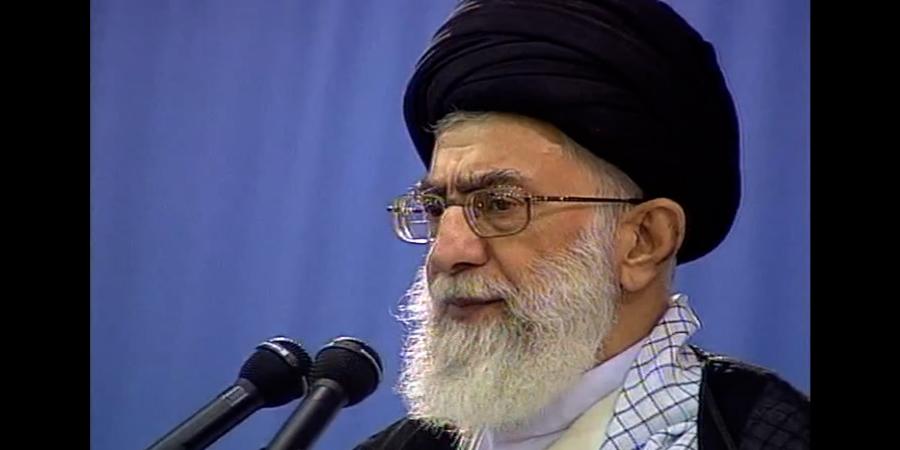
Martyr Imam Khamenei's selected statements on Natural Environment
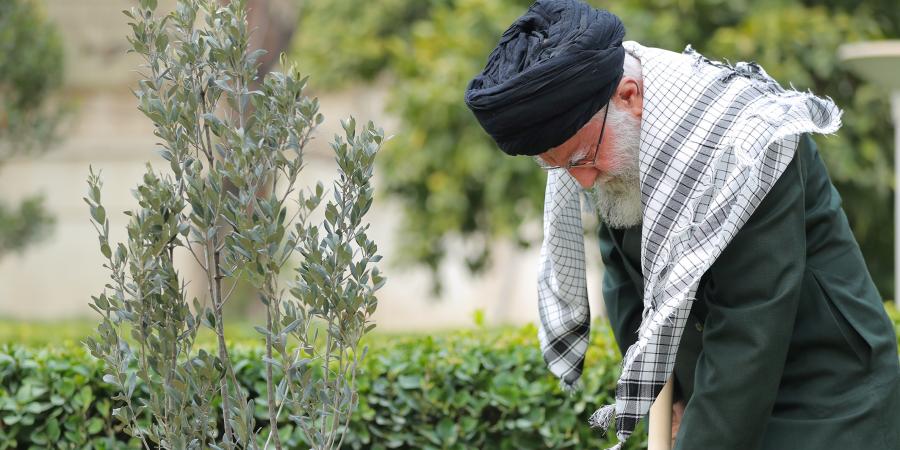
Islam places importance on being in contact with nature. In other words, Islam has not separated human beings from nature. It advises people to both care for nature and make use of it. It is stated in the Quran that God [made the earth your habitation] [11:61]. So, Almighty God wants you to cultivate the earth and nature. The Quran also tells us to [eat of its fruits] — [Eat of its fruits when it fructifies] [6:141]. We should make use of its fruits. Therefore, you take care of the earth and nature, and you also nurture and protect it, and in return you benefit from nature. This is emphasized in Islam. These are some of the things that are mentioned in the Quran, and we also have numerous hadiths about the environment. (Mar 5, 2024)
Islam and the divine religions have sought to preserve the balance between humanity and nature. That is the fundamental and overarching objective. The disruption of this balance stems from a number of factors, chief among them human selfishness, the pursuit of power, and the bullying and domineering behavior of some people. Once that balance is lost, environmental crises inevitably follow—and such crises ultimately inflict harm on all of humanity and all generations. (Mar 8, 2015)
Our view of trees, plants, greenery, and the environment is rooted in knowledge and spirituality—it is a perspective grounded in religious understanding. That is why, in the sacred law of Islam, planting trees and cultivating saplings are regarded as virtuous deeds. Our Constitution likewise contains a specific principle devoted to the environment, expressing in the clearest terms both its importance and the necessity of protecting it. There is also a Quranic verse describing the fiercest and most malicious of adversaries, outlining their defining characteristics. One of those characteristics is this: [If he were to wield authority, he would try to cause corruption in the land and to ruin the crop and the stock.] [2:205]. Such a person destroys both crops and future generations—that is, both plant life and human life. He brings ruin to agricultural production and to human flourishing alike. (Mar 8, 2015)
Another issue concerning the protection of the environment is the preservation of wildlife. If we are indifferent towards wildlife and the animals which exist throughout country–in forests, deserts and plains–this will certainly jeopardize national interests. Illegal hunting should be taken seriously as well. In the holy Islamic sharia law, hunting is only allowed when it is done with the purpose of providing food. Otherwise, it is not allowed in any way. Islamic law has not given permission for other kinds of hunting. When you take a look at Islamic law books, they mention that daily prayers conducted on a hunting trip have to be done completely [not done in abbreviated form as on normal trips]. In other words, such trips are haraam. This is what it means. It signifies that this is a wrong task. This point should receive attention. The issue of wildlife is very important. (Mar 6, 2022)
If this egotism is shown against nature, the result will be the destruction of the natural environment which is why many efforts are being made – rightly so – in the world on the issue of the natural environment. Ignoring the natural environment of human life is the result of rebellion, egotism and selfishness against nature. (Oct 13, 2006)
Protecting and preserving the environment is fundamentally a responsibility of the governing authorities. Of course, the people also have an important role to play and can make valuable contributions. But that depends on the relevant state institutions pursuing the matter with genuine seriousness. If the authorities demonstrate real commitment, the people will undoubtedly support them and join in those efforts. (Mar 8, 2015)
The issue of greenhouse gases is not something that harms only one country or one segment of the population; it affects all of humanity. The fundamental challenge with environmental issues, however, is that the consequences of environmental degradation do not become apparent quickly or easily. By the time they do, repairing the damage is often a long-term undertaking—and in some cases, impossible. Take the melting of the polar ice caps, for example. If it leads to rising sea levels and the many ecological consequences that follow, it is no longer something humanity can simply reverse. These are not problems that can be remedied in ten, twenty, or even a hundred years. They leave lasting consequences for humankind. (Mar 8, 2015)
Jun. 30, 2026